Gerald Willen’s PoW Logbook – Summary
Prisoners of War were issued with a logbook (supplied by the American YMCA) “intended to be kept as a permanent souvenir of the present unpleasentness”. I suspect that some were hardly used, whilst others such as Gerald Willen’s & John Harder’s were made full use of to while away the time that otherwise was, I suspect, perceived to be extremely boring compared to what they’d become used to as I’m sure PoW life wasn’t always as depicted in such films as The Great Escape.
The copies of the logbook were kindly supplied by Scott, Gerald Willen’s son. At the moment, there’s just the scans, but I plan to follow this up with a transcription (at least of the “longhand” sections of the log)
As this is quite a long section, I thought I’d add a “contents” section here…
Gerald Willen’s PoW logbook –
- Cover pages
- Contents and some details of travel in France
- History of capture
- Room mates: Room 14, Co 5, Block I
- Menus
- Red Cross parcels
- Features of life under the Germans
Gerald Willen’s PoW logbook – Cover pages
top
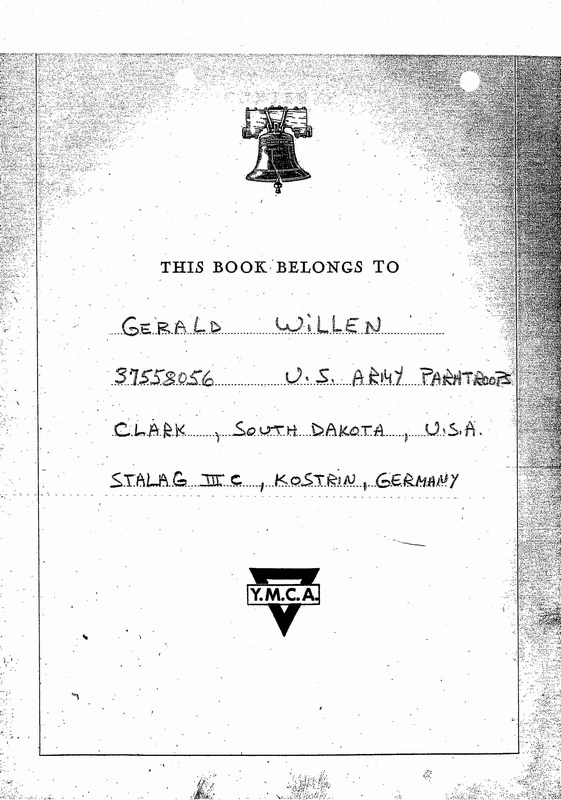
These are the three cover pages with space to record the PoW’s name & details together with a “welcoming message” from the American YMCA
 |
 |
 |
| Gerald Willen 37558056 US Army Paratroops Clark, South Dakota, USA Stalag IIIc, Kostrin, Germany |
Gerald Willen’s PoW logbook – Contents and some details of travel in France
This section briefly outlines Willen’s life & travels as a PoW
 |
 |
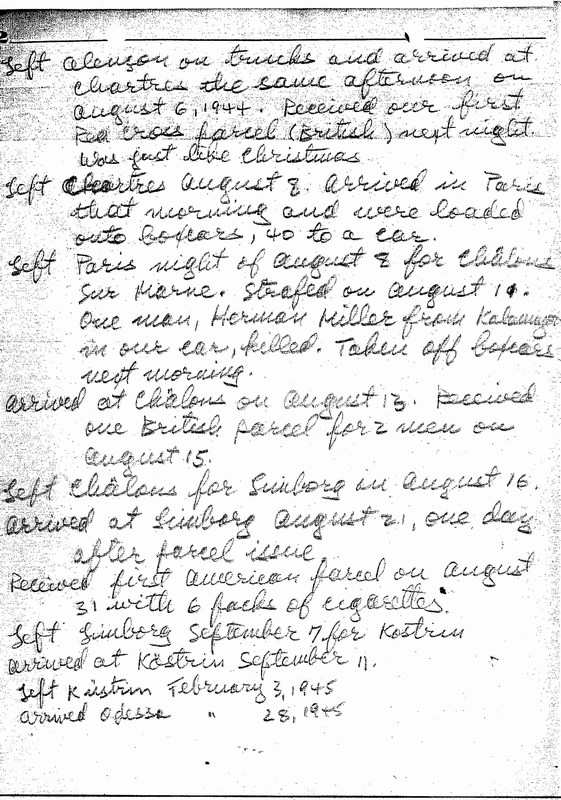 |
| This outlines the contents of Willen’s PoW logbook | This page summarises Willen’s travels from capture to liberation
|
This page provides a more detailed version of his time from PoW clearing to release
|
Gerald Willen’s PoW logbook – History of capture
This is a detailed description of how he was captured – the result of being sent on a mission.
History of Capture

Charlie Davis and I had put up our pup-tent that day because it looked like rain. And when it did rain, all the other men in the section piled in, so there was hardly room for us. It was uncomfortable, but pleasant, as it had been a long time since the section had a chance to “shoot the bull”. Several of us, including me had the “GI’s”, a not uncommon ailment and it was in and out of the tent all day for the afflicted ones.
The section, at the time, wasn’t complete. One man suffered a rupture from the jump on “D” Day; Rollo Morris was wounded during the attack about ten days ago; Prescott and Drysdale, out on patrol were missing for two days.
About seven o’clock that night s/sgt Gillette, our sector chief, came in and picked out Mendietta, Kastroatas, and Dixon for a patrol. I was glad 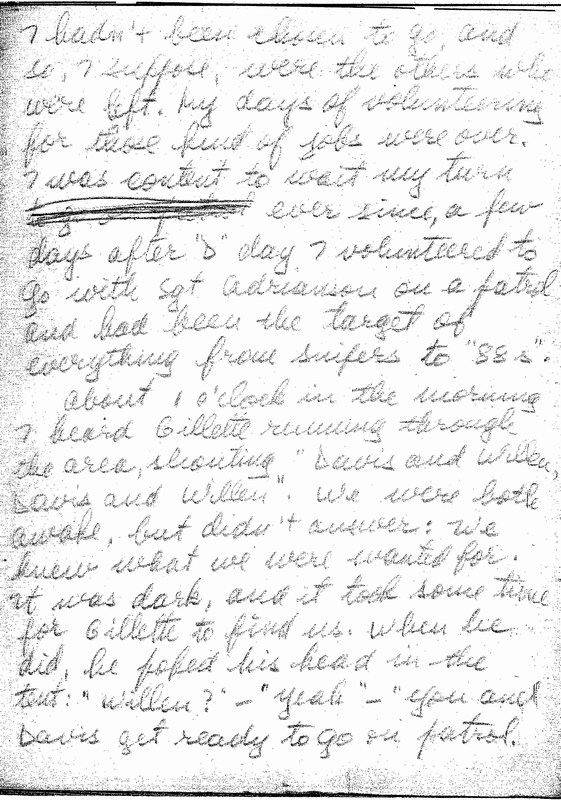 I hadn’t been chosen to go, and so, I supposed, were the others who were left. My days of volunteering for those kind of jobs were over. I was content to wait my turn ever since, a few days after D Day, I volunteered to go with Sgt Adrianson on a patrol and had been the target of everything from snipers to “88s”.
About 1 o’clock in the morning I heard Gillette running through the area, shouting, “Davis and Willen, Davis and Willen”. We were both awake, but didn’t answer; we knew what we were wanted for. It was dark, and it took some time for Gillette to find us. When he did, he popped his head in the tent: “Willen?” – “Yeah?” – “You and Davis get ready to go on patrol.
 Take enough rations for two days and fill your canteens”. Charley and I started to dress in silence, none too happy about it. After a while Gillette came back and told Davis to go back to sleep, that two men from 1st Bn HQ Co. would go in his place. Charley said he would go in my place as I had the G.I.’s. I refused his offer, and besides Gillette said they needed someone who spoke French and German.
I finished dressing and went over to get my rations. I picked out “K Rations” and four “D bars”, as I didn’t want to be loaded down to heavily. After filling my canteen, I walked over to the C. P. where Kastroutas, Davis and Mendietta, back from patrol were turning in their report. I was glad to see them, and hoped they would see me again under the same
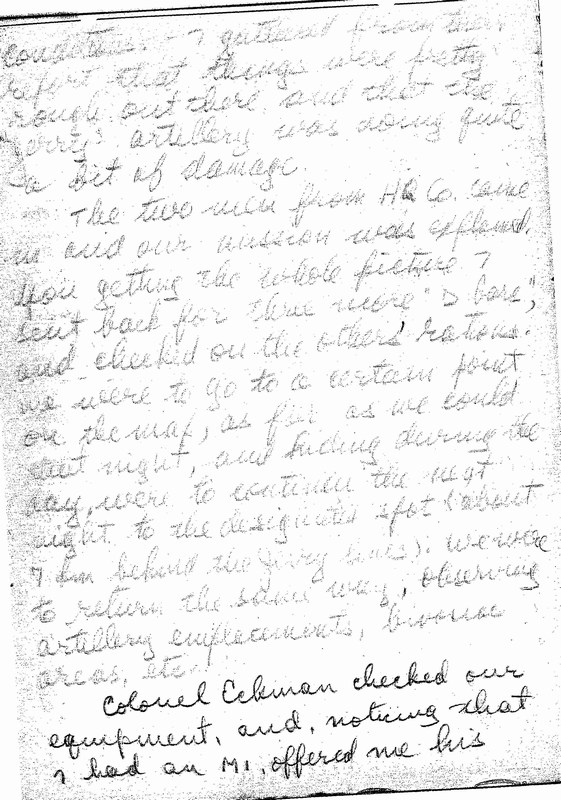 conditions. I gathered from their report that things were pretty rough out there, and that the Jerry’s artillery was doing quite a bit of damage.
The two men from HQ Co. came in and our mission was explained. Upon getting the whole picture, I sent back for three more “D bar”, and checked on the other’s rations. We were to go to a certain point on the map, as far as we could that night, and hiding during the day, were to continue the next night to the designated spot (about seven km behind the Jerry lines). We were to return the same way, observing artillery encampments, bivouac areas, etc.
Colonel Eckman checked our equipment, and, noticing that I had an M1, offered me his  Tommy gun which I gladly accepted.
All this took some time and it wasn’t until 4am that we checked out with the last outposts. In my opinion, it was too late to get started as dawn wasn’t more than an hour away.
Our objective was almost due northwest, but there was a reported enemy line to the north, and to go northwest meant getting over a cross road which was covered by “Jerry” machine guns.
We struck out to the west, skirting close to the hedgerows. Travelling like that, up and across fields, we couldn’t make much time. I figured we were about 1½ kilometers out when it started getting light. Consulting the other two, I decided to do one more field and then to “hole up” until
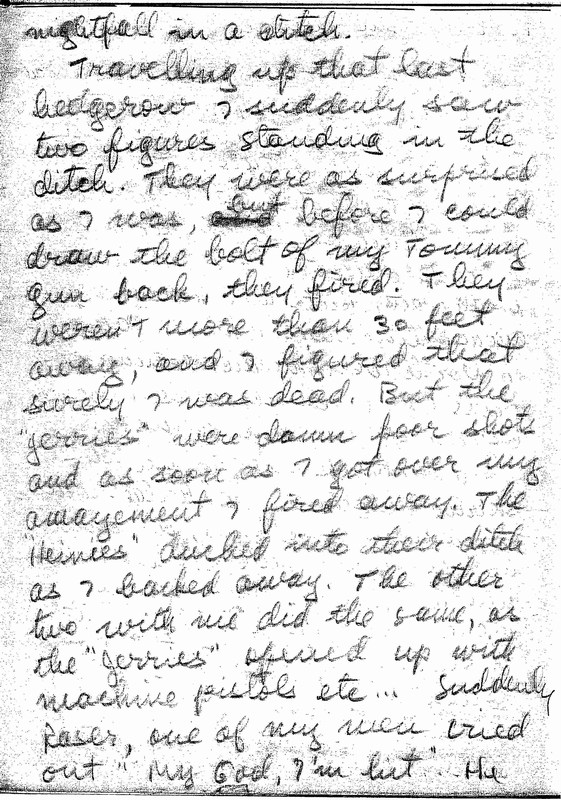 nightfall in a ditch.
Travelling up that last hedgerow, I suddenly saw two figures standing in the ditch. They were as surprised as I was, but before I could draw the bolt of my Tommy Gun back, they fired. They weren’t more than 30 feet away, and I figured that surely I was dead. But the “jerries” were damn poor shots and as soon as I had got over my amazement I fired away. The ”Heinies” ducked into their ditch as I backed away. The other two with me did the same, as the “Jerries” opened up with machine pistols, etc. Suddenly, Raser, one of my men cried out: “My God, I’m hit”… he 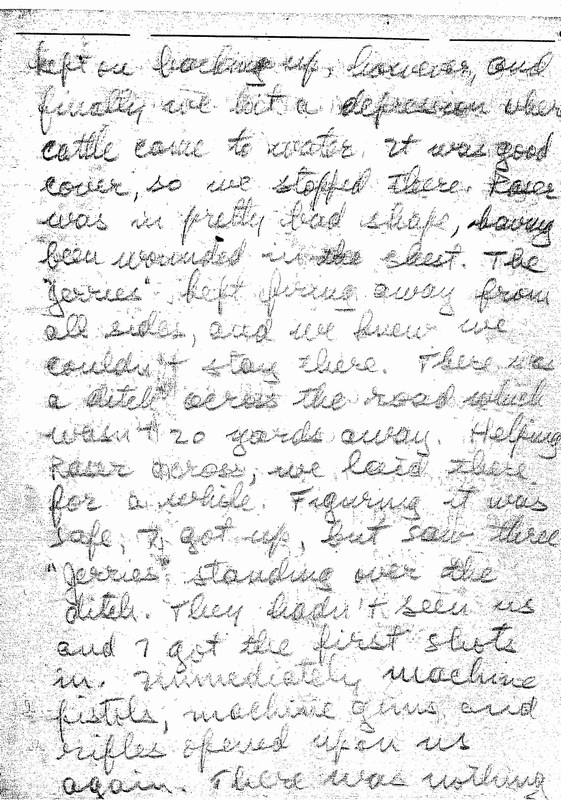 kept on backing up, however, and finally we hit a depression where cattle came to water. It was good cover, so we stopped there. Raser was in pretty bad shape, having been wounded in the chest. The “Jerries” kept firing away from all sides, and we knew we couldn’t stay there. There was a ditch across the road which wasn’t 20 yards away. Helping Raser across, we laid there for a while. Figuring it was safe, I got up, but saw three “Jerries” standing over the ditch. They hadn’t seen us and I got the first shots in. Immediately, machine pistols, machine guns and rifles opened up on us again. There was nothing
 We could do but leave Raser and try to get back
We travelled along the ditch for a while until we came to a road block. There was nothing we could do but try to get over it, as it was quite light now and the “Heinies” had the adjoining fields covered. We started on a dash and as we jumped onto the block, a mine went off, knocking Jerry and me down. I lost my Tommy gun and my two hand grenades were knocked off my harness (as I found out later). Getting over the  shock, I asked Jerry if he was hurt, miraculously, neither of us were.We picked ourselves up and ran a little further. Turning a corner we ran up against three “Jerries”. Both groups scurried for cover, Jerry fired away, and as I had no weapon, and seing that I had lost my grenades, I couldn’t do anything. The “Heinies” once again opened up and we took to the ditch again. Jerry by this time was out of ammunition. The three “Jerries” cautiously came out from their cover and fired away at us. The advanced more boldly when there was no answering fire.
And so, shouting “Kamerad”, Jerry and I gave up.
 The “Jerries” were pretty excited and babbled away madly. They searched us, took away my rations, but left me the one package of cigarettes I had. Jerry was luckier, all they took from him was his pen knife.

Gerald Willen’s PoW logbook – Room mates: Room 14, Co 5, Block I
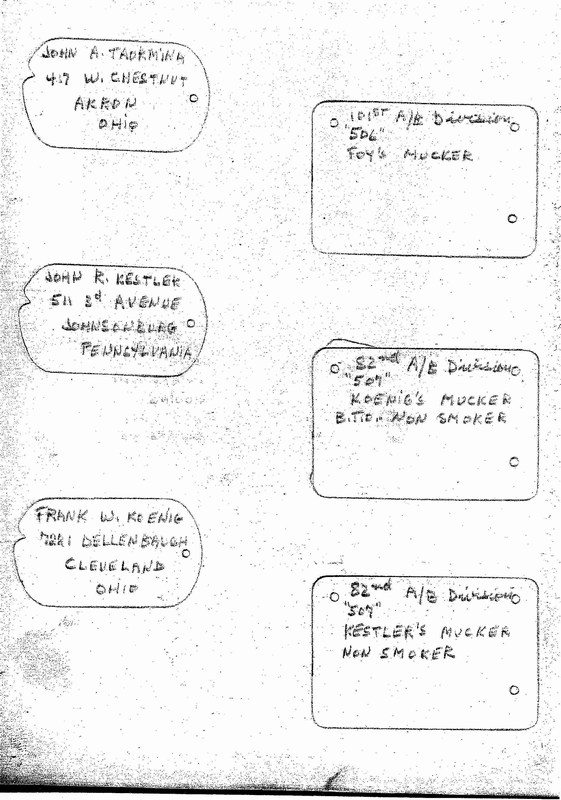
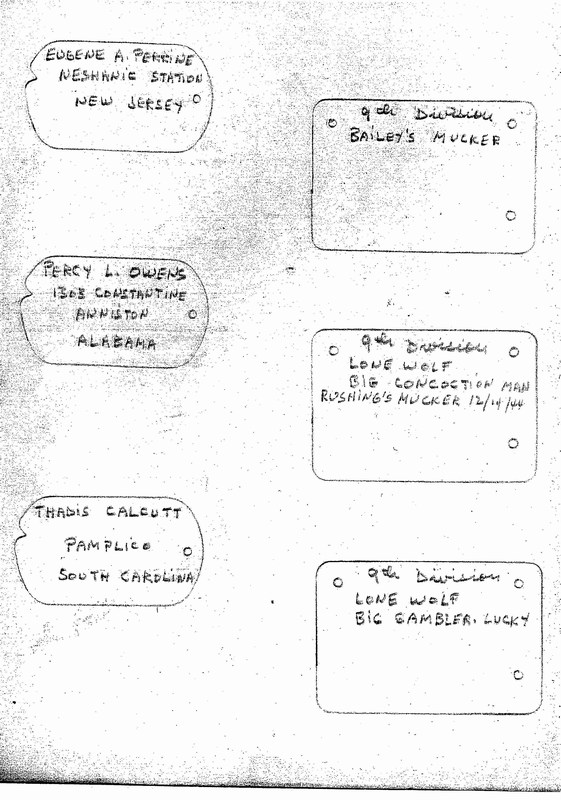
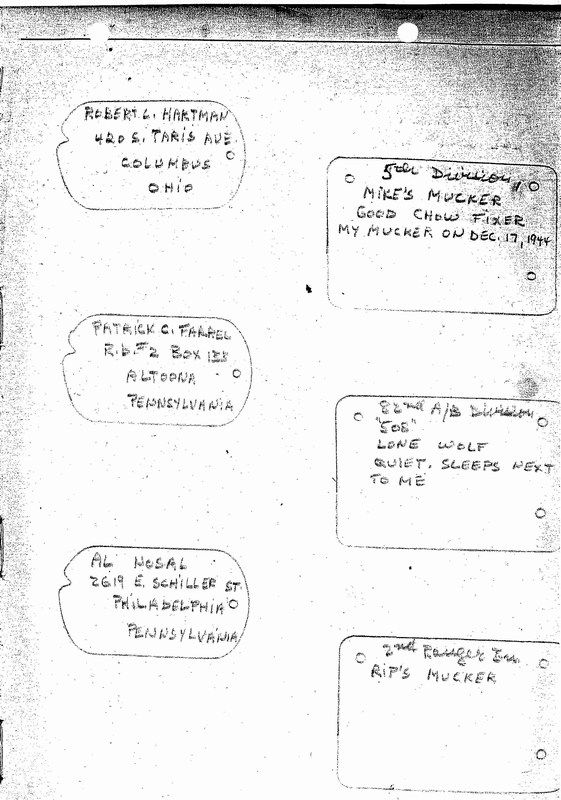
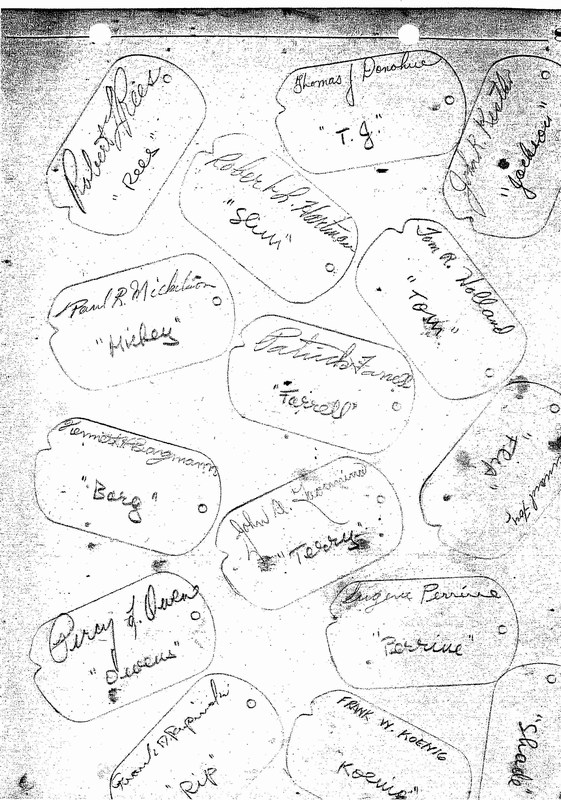
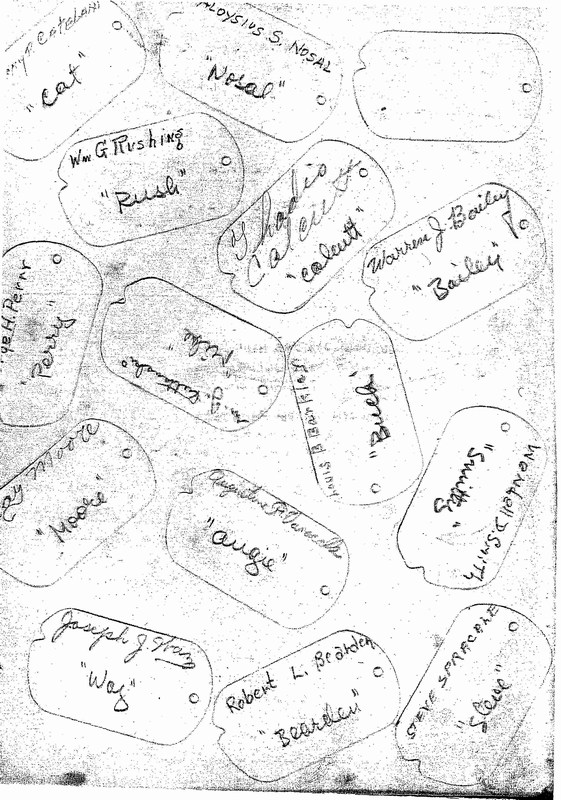
This section includes names & details of Willen’s room mates in Stalag 3C, together with their signatures
 |
 |
 |
 |
 |
 |
 |
 |
 |
 |
 |
 |
Gerald Willen’s PoW logbook – Menus
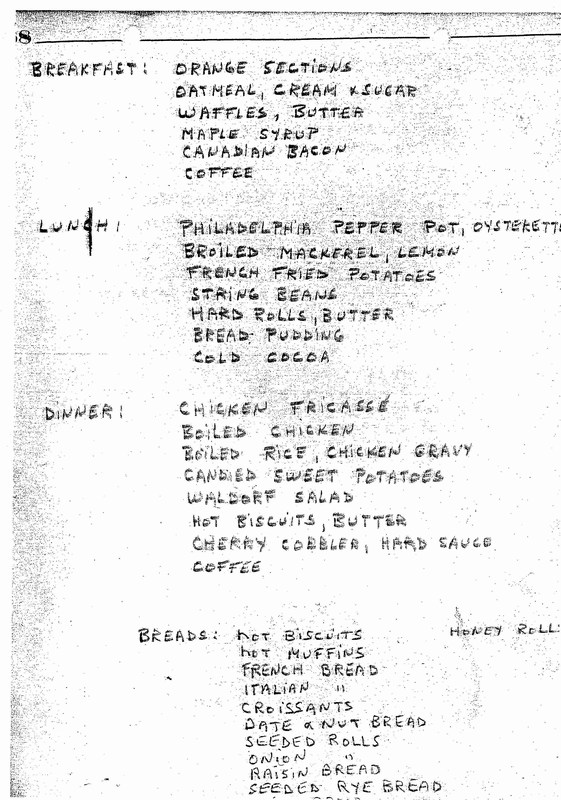
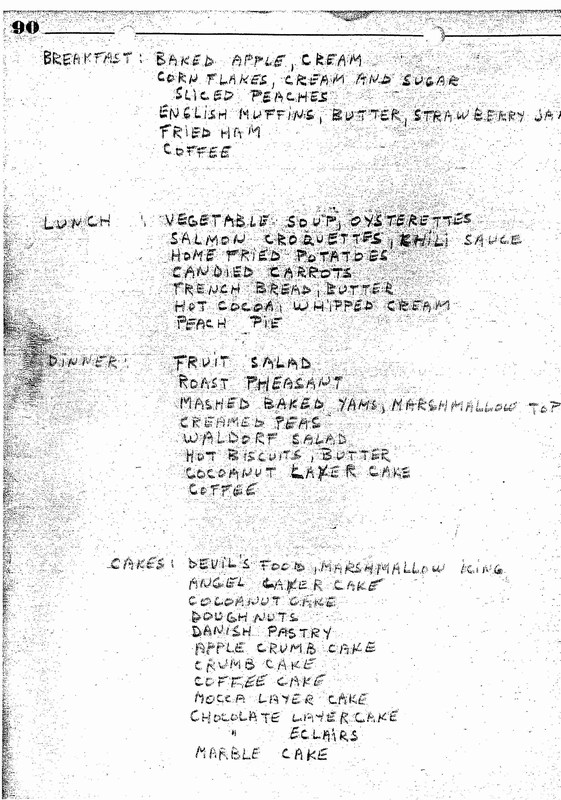
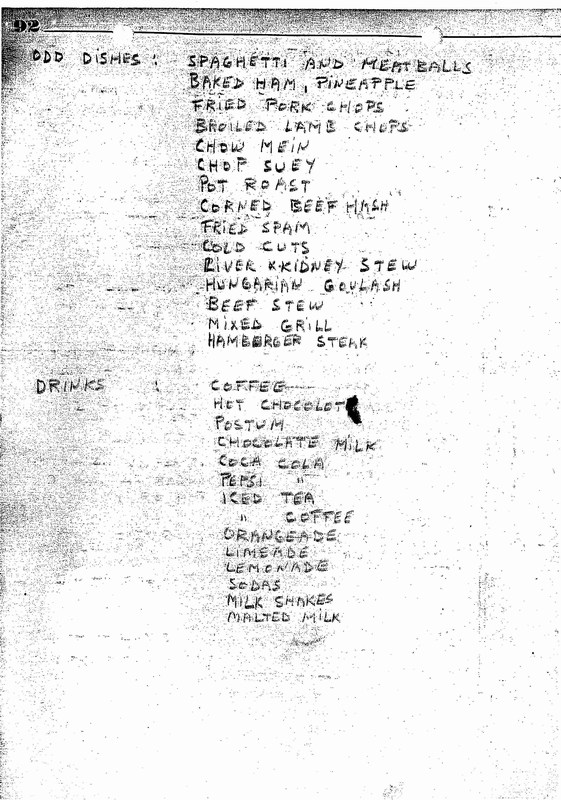
This section includes some menu ideas (‘though I suspect NOT from his time as a PoW!) & then a section entitled “Menus at 3C” (which, I suspect, are more typical of PoW life)
 |
 |
 |
 |
 |
 |
 |
 |
 |
Gerald Willen’s PoW logbook – Red Cross parcels
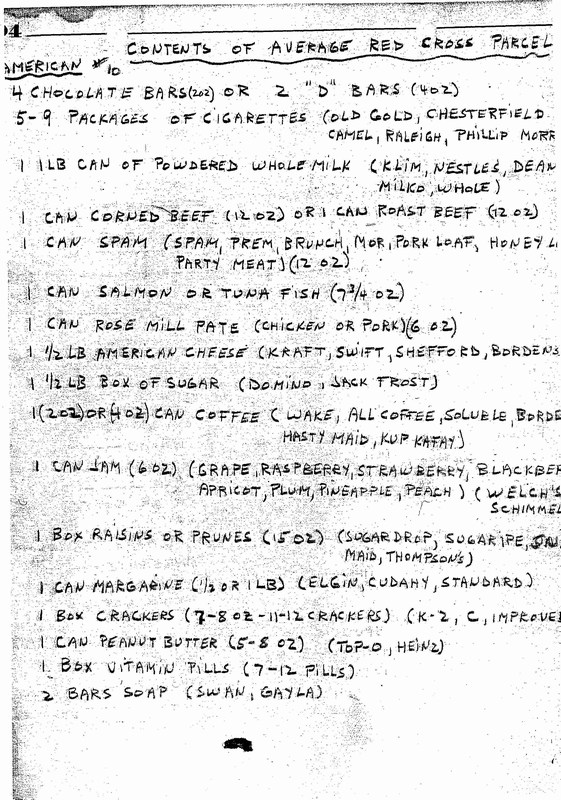
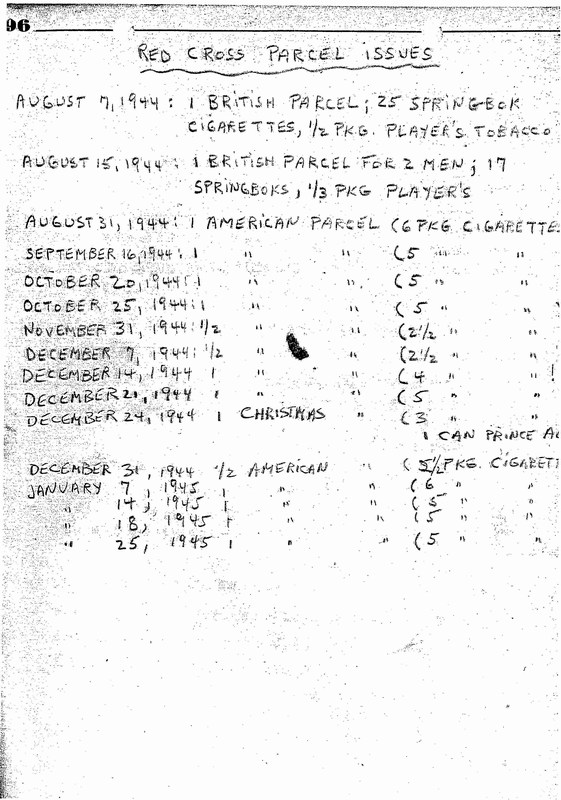
It would appear that Willen received a regular supply of Red Cross parcels to add to the food supplied by the Germans. Of course, some of the contents of these parcels could (& would) be used to attempt to bribe guards for escape purposes (‘though I have no information whether Willen engaged in such activities)
 |
 |
 |
 |
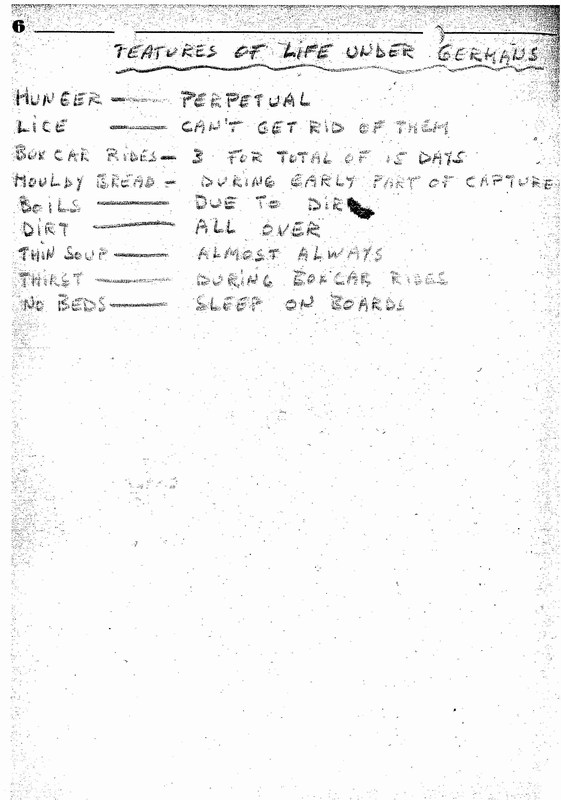
Gerald Willen’s PoW logbook – Features of life under the Germans
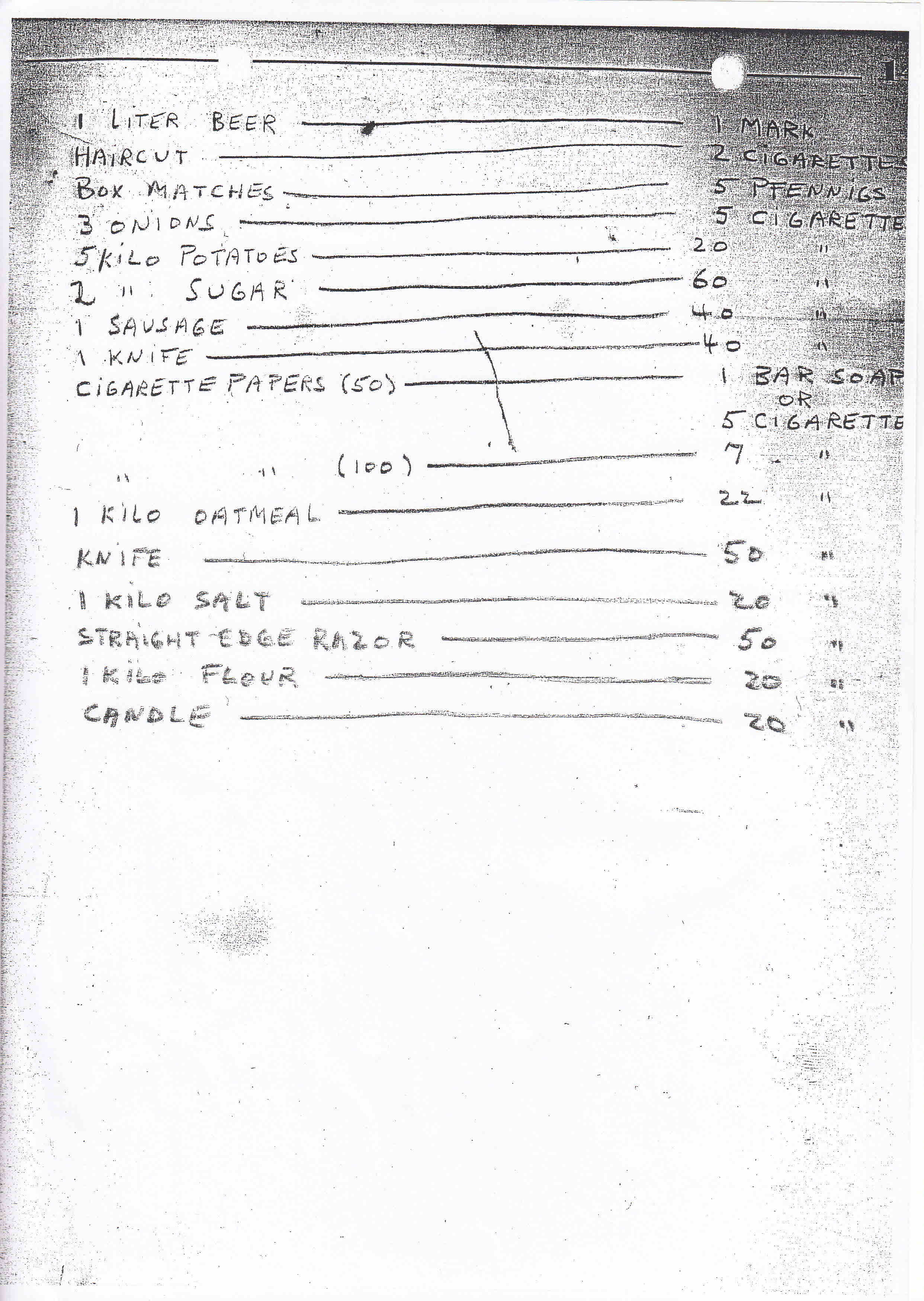
This final section includes an interesting table of exchange rates that food could be swapped for… largely cigarettes!
 |
 |
 |
Features of life under Germans
|
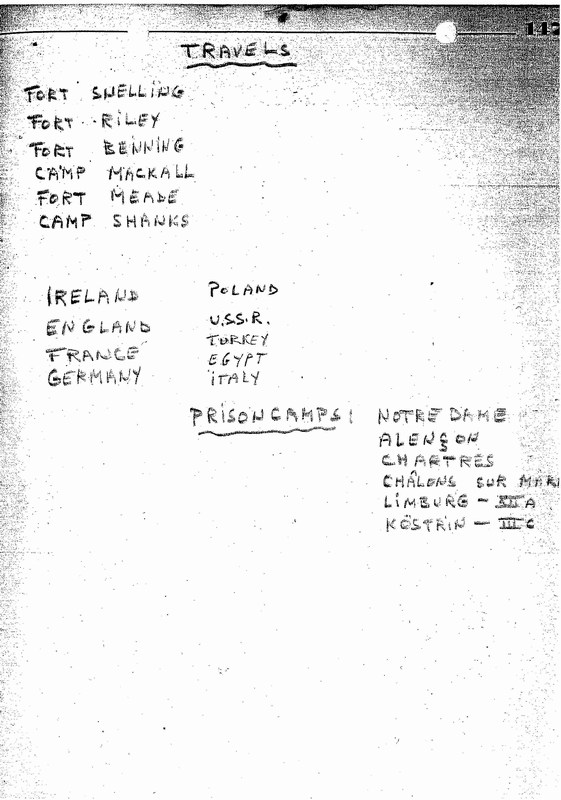
Travels
Prison Camps
|
 |
Recent Comments