Pte Norman Harold Tiplady Welch 4343414
5th Battalion East Yorkshire Regiment
Summary
NHT Welch was born in Barton-Upon-Humber in 1916. He enlisted in the army in the mid-thirties joining the East Yorkshire Regiment.
He was captured on the 5th of July 1944 and ended up at Stalag VIII-B Teschen (Cieszyn). He would have suffered the “Long March” of early 1945 as the Germans moved the PoWs in front of the Russian advance.
After the war he returned to the Barton area and worked in the chemical industry. Married with at least one daughter, he died in 2011.
Early Life
Norman Harold Tiplady Welch was born in Barton-Upon-Humber on the 30th of November 1916 the youngest of four siblings. His birth registration was in the name Harold NT Welch and in the family, he was always known as Harold. However, in all other official documents his first name is given as Norman.
Unfortunately, his mother died in in 1929, and his father, noted as incapacitated by illness on the 1939 Register, died in 1940. His sister had also died, aged 16, in 1927.
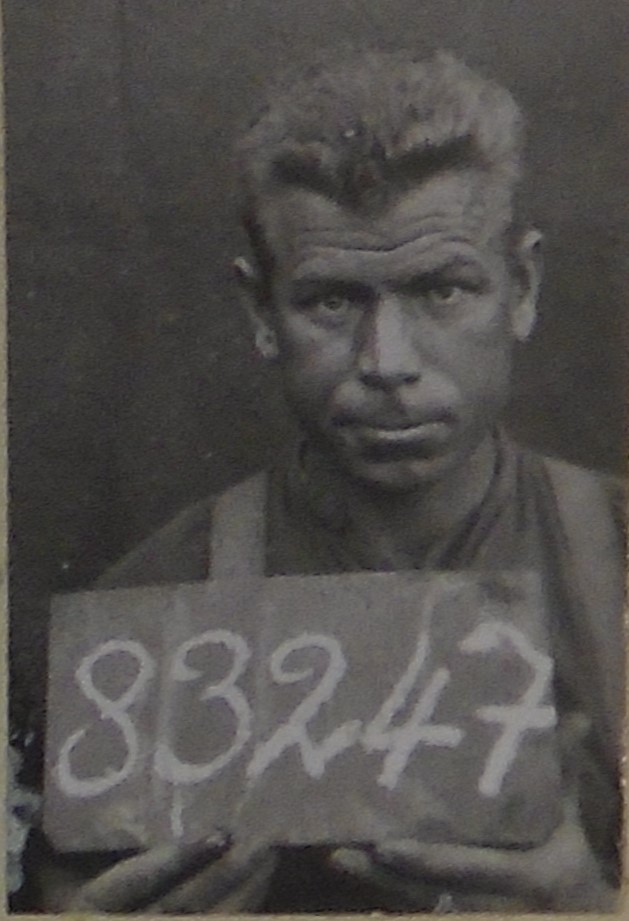
On his German PoW card, he is described as 5ft 6, fair hair, with a scar over his left eye.
Service Life
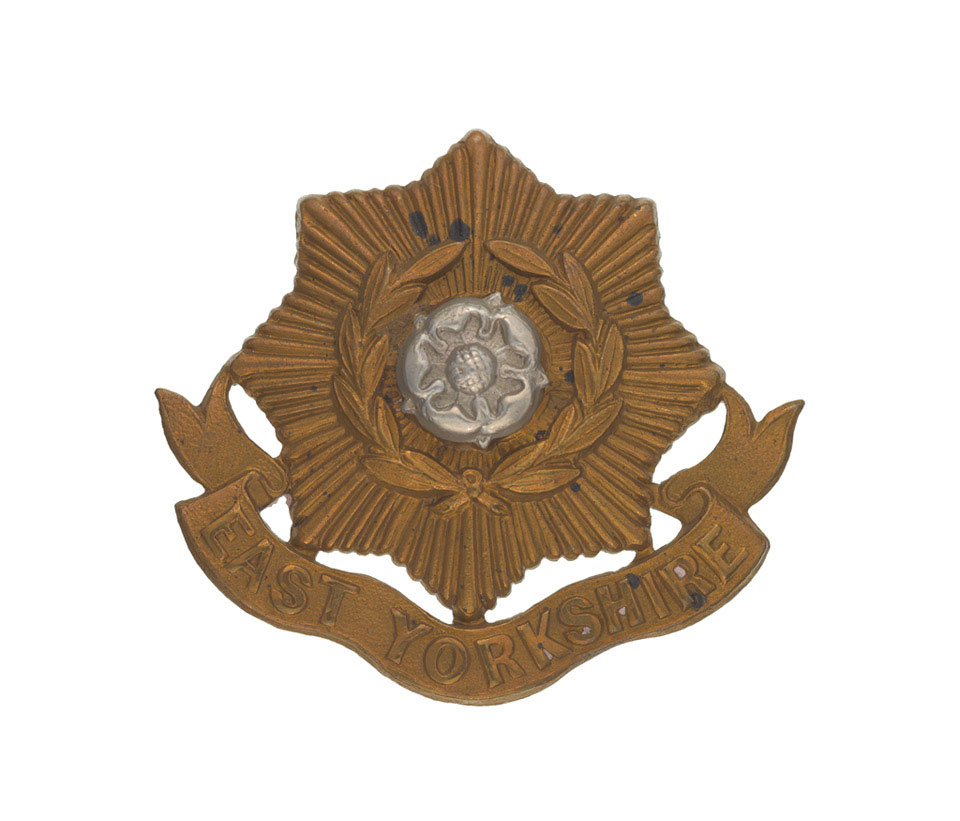
By 1935 Welch was serving with the East Yorkshire Regiment (EYR). That year the Regiment was renamed the East Yorkshire Regiment (Duke of York’s Own).
[See the Regimental Badge – East Yorkshire Regiment]
A note on the Dinsdale List website (whose main concern is with soldiers from Hull serving in the EYR in World War One, but it contains other information – though sadly this now appears to be no longer available online) indicates that N Welch with the above serial number, was in the 1st Battalion.
He gained his Third-Class Education certificate in Beverley, Yorkshire, in 1935, and then his Second-Class Certificate in Dalhousie, India, in 1937. Welch was made unpaid L/Cpl on the 7th of August 1939.
The 1st Battalion remained based in India throughout the war. It is not clear when Welch transferred to the 5th. The 5th was a Territorial Battalion formed in 1939 that was reinforced from the regular strength at times following casualties.
The 5th Battalion fought in North Africa – where they received particularly heavy casualties – and were then involved in the invasion of Sicily and the following Italian campaign, before being withdrawn for training for Operation Overlord.
Time in Normandy
On D Day the 5th Battalion landed on Gold Beach Red King Sector. “A” Company was on the right with “B” Company in support, “D” Company on the left with “C” Company in support, the leading companies to clear the beaches and the support to then press on through to Ver sur Mere on the right and the crossroads to the East of La Riviere on the left.
When the objectives were achieved the Green Howards were to pass through towards objectives further inland. It went smoothly on the right but on the left towards La Riviere the bombardment had failed to deal with the battery there and several machine gun nests were also situated in houses and on the seawall. Three supporting amphibious tanks had been taken out by the gun. The petard tank, that was to be the back-up should the bombardment have failed, was also hit – exploding amongst the troops causing many casualties. Eventually the gun was taken out and with tank support to crash through the high surrounding walls, the houses were cleared. “C” company was redirected to assist from the rear.
Objectives achieved, A” & “B” Companies proceeded to Crepon, the badly mauled “C” & “D” Companies following once they had been amalgamated into one composite company. Passing through the Green Howards they made steady progress against sporadic opposition. At 11pm the village of Brecy was occupied – some 2000 yards short of their planned objective.
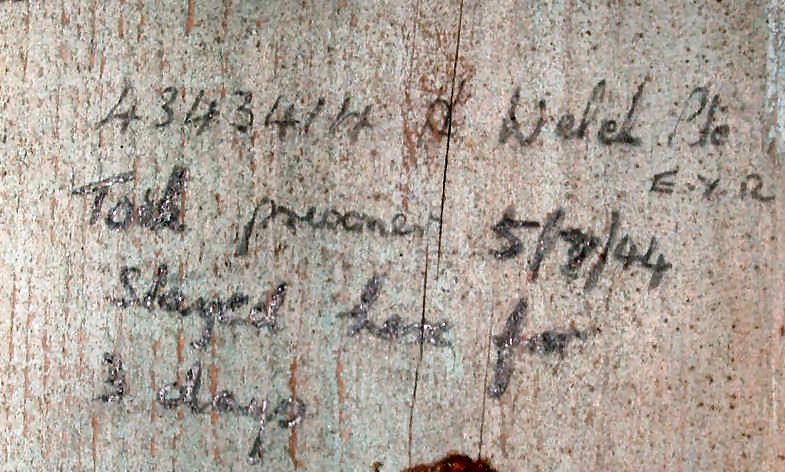
Welch writes on “the shed” wall that he was “took prisoner” on the 5th of July (the date given on his German PoW card too), however he is listed as missing from the 1st of July (casualty list 1502). His endorsement on the shed wall goes on to state that he was at “the shed” for three days.
In the early days of July, the Battalion was in the area of Longraye holding position and undertaking various patrols some of which are detailed in notes attached to the sparse Battalion War Diary – one in the area of La Poterie on the 5th.
PoW Life
From “the shed” he is taken to Germany presumably by the usual route.
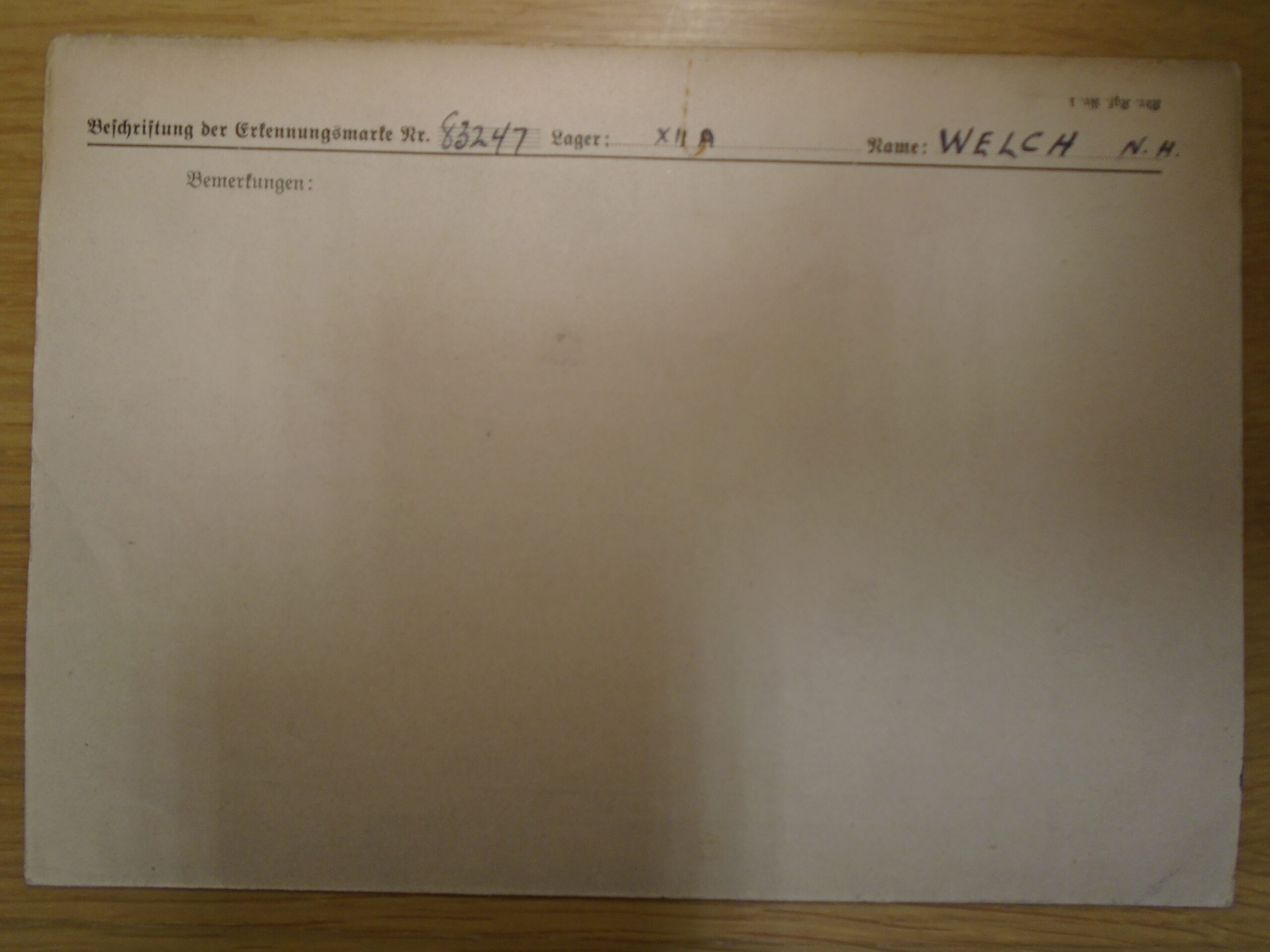
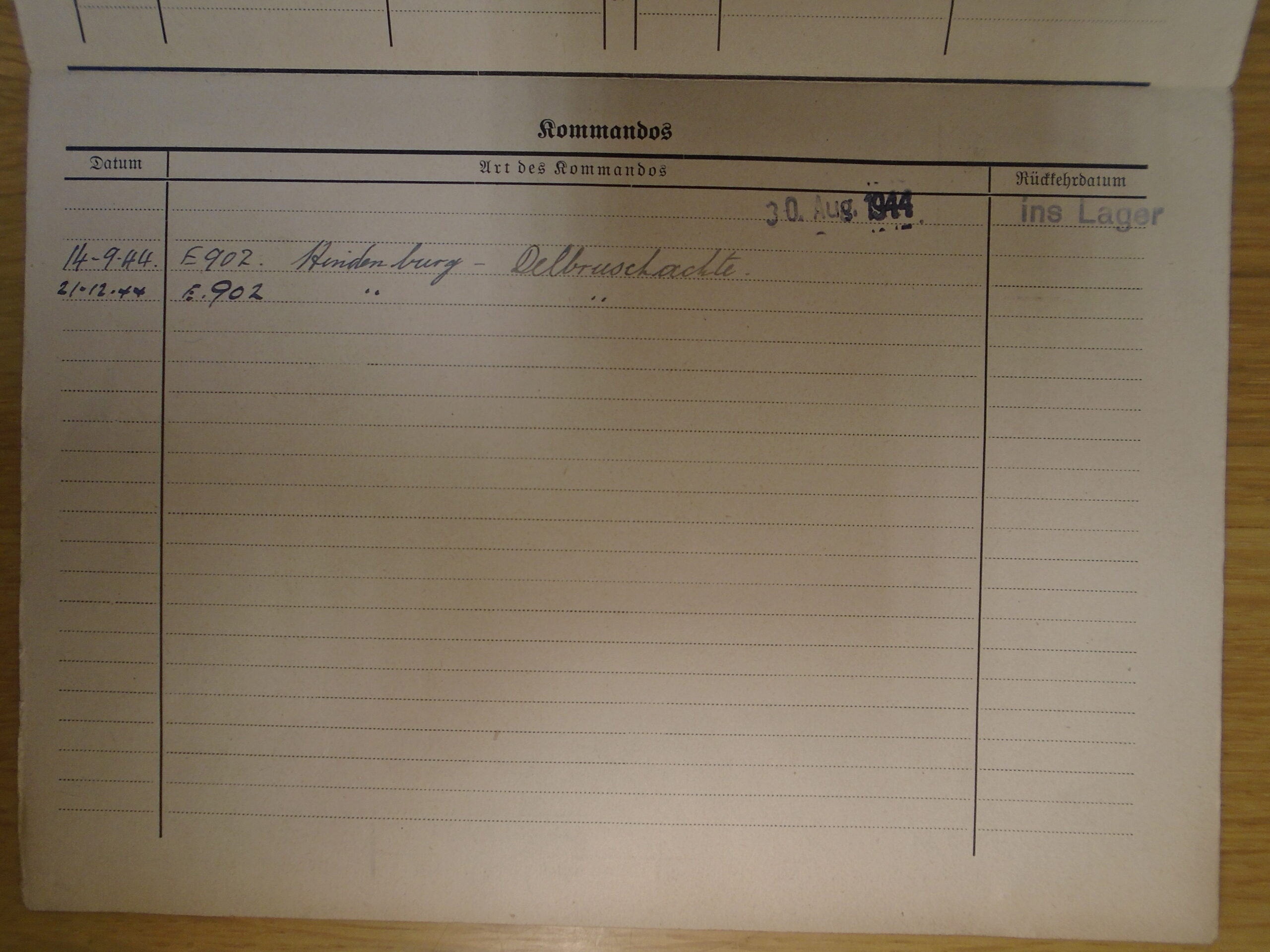
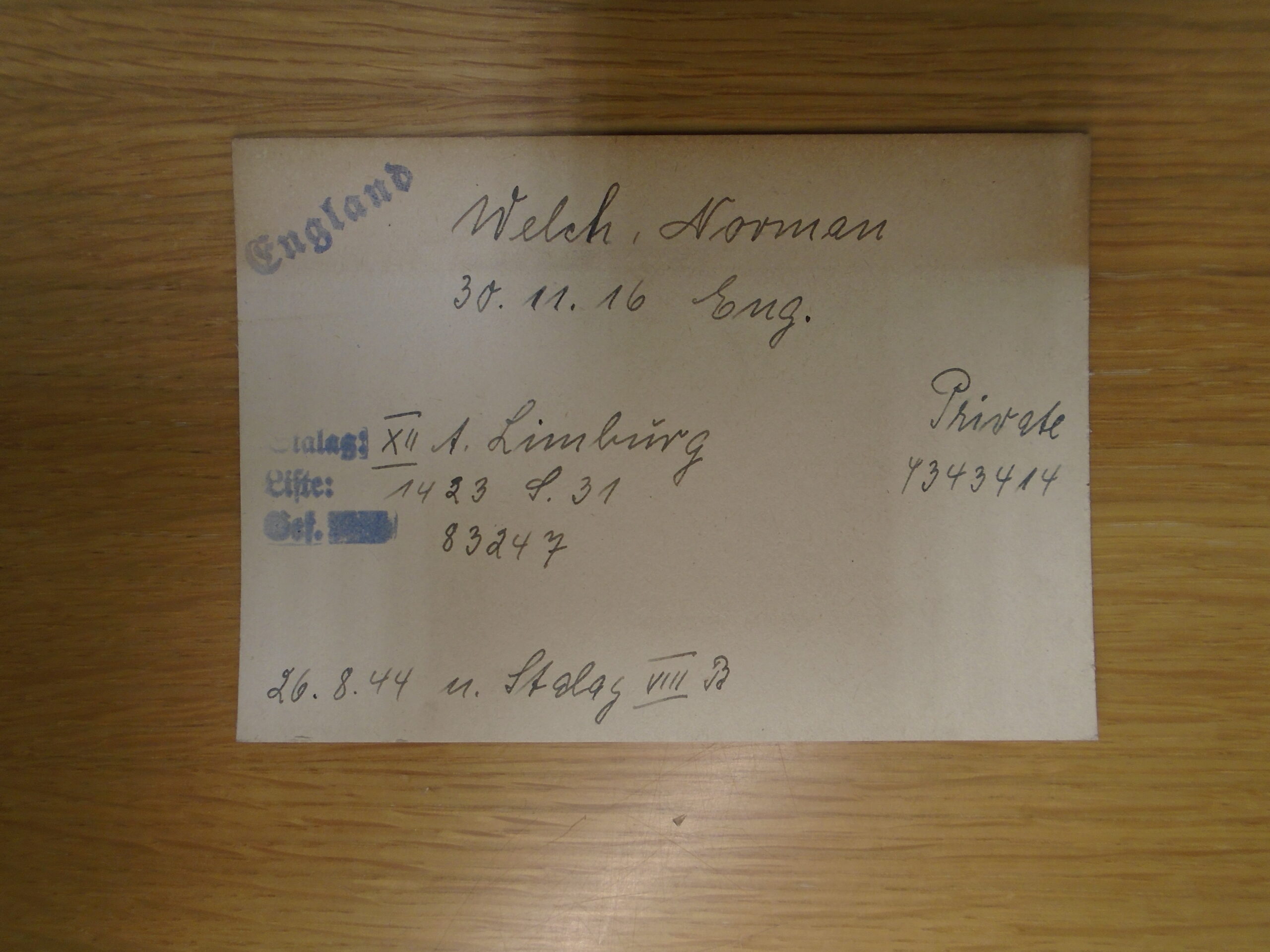
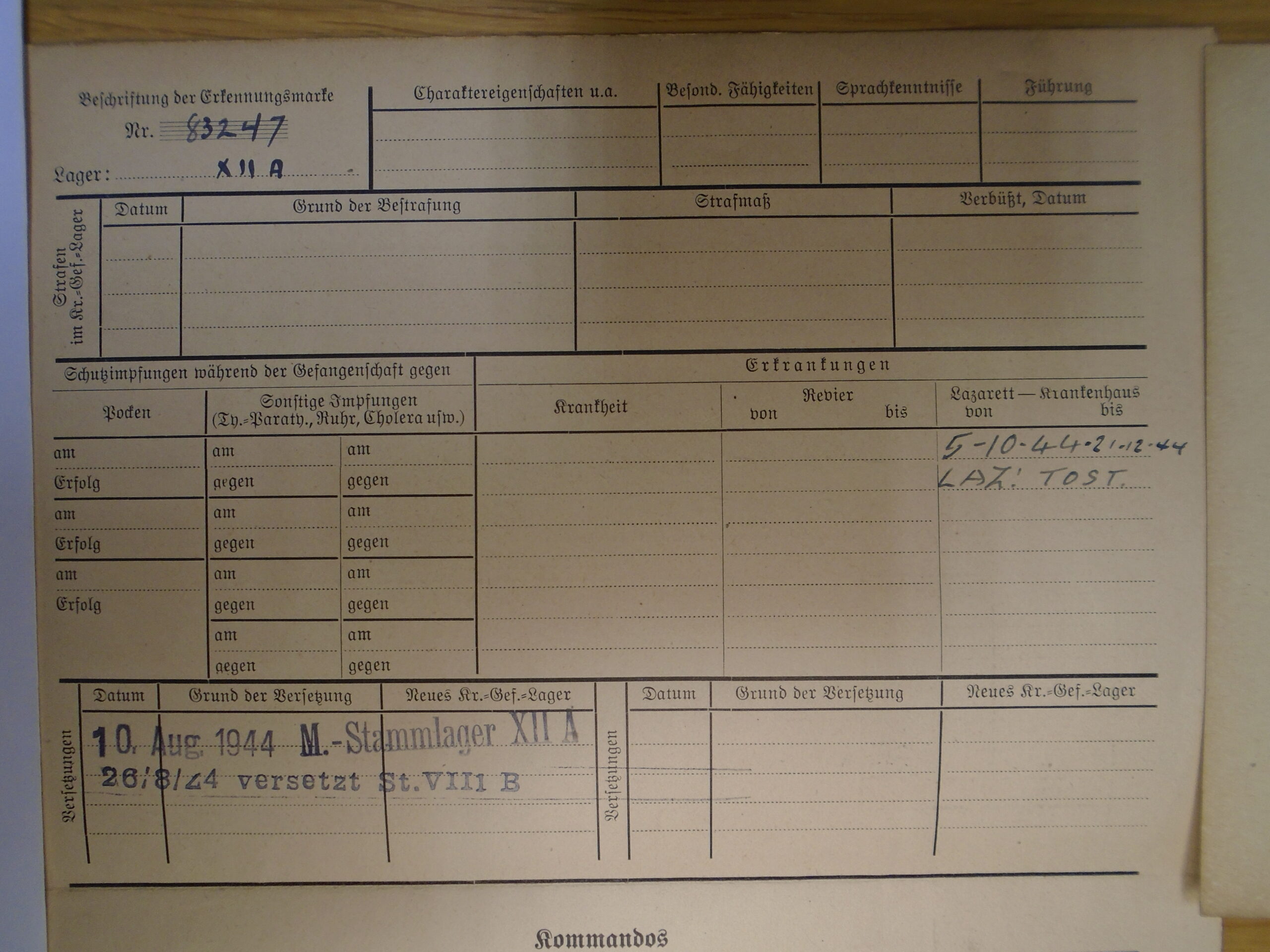
His German PoW card was compiled at Stalag X11A Limburg which was the standard clearing centre for infantry prisoners. He was assigned the number 83247. On the 26th of August he was transferred to Stalag VIIIB at Teschen and hence to E907 at Hindenburg on the 14th of September – the coalmine referred to by others.
[See the German PoW Record Card – NHT Welch]
The prisoners were marched away from the advancing Russians and spent up to twelve weeks on the road in freezing temperatures – it was the hardest winter of the century in that region.
There seems to be no liberated prisoner of war questionnaire for him at the National Archives.
Post War
Welch returned to Barton-upon-Humber to work in the chemical industry.
He married in 1946 – his bride was the sister of his brother’s wife (his brother had married in 1940). Harold had at least one daughter.
His nephew expressed fond memories of staying with Harold during the school holidays when his father, who had remained in service, was deployed abroad. He related that Harold explained how he had been captured – he had simply fallen asleep and woken up a prisoner.
Another tale mentioned at a family gathering was that Harold’s brother, who was in the army but engaged in logistics rather than on the front-line at that time, was unaware of Harold’s fate until a mutual friend told him he had seen the endorsement in “the shed” when out in Normandy.
Welch died on the 25th of July 2011.
Research Done
We have no additional research to share at this time.
Other Links
We have no additional links to share at this time.
Signature NHT Welch and NHT Welch photo from German PoW card [return to info]
Regimental Badge – East Yorkshire Regiment [return to info]
German PoW Record Card – NHT Welch [return to info]