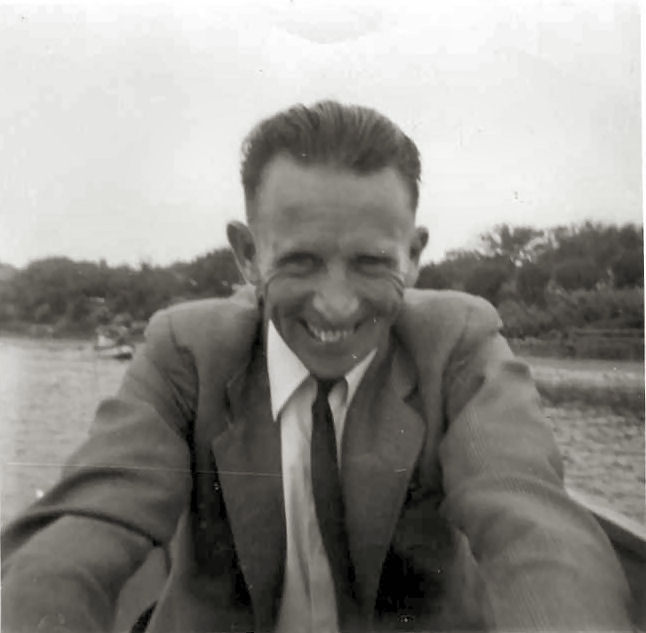
Cpl Thomas Mitchell Caldwell 14209000
6th Battalion Royal Scots Fusiliers
Summary
Thomas Mitchell Caldwell was born in Ayrshire, Scotland in 1918. He was a farmer. He arrived in Normandy with the Royal Scots Fusiliers on the 16/17th of June 1944 and was captured on the 29th of June 1944 near Ruaray. Via “The Shed” and stalag XIIA, amongst others, he ended up at Stalag 357 Oerbke near Fallingbostel. Liberated in April 1945. He died in 1992.
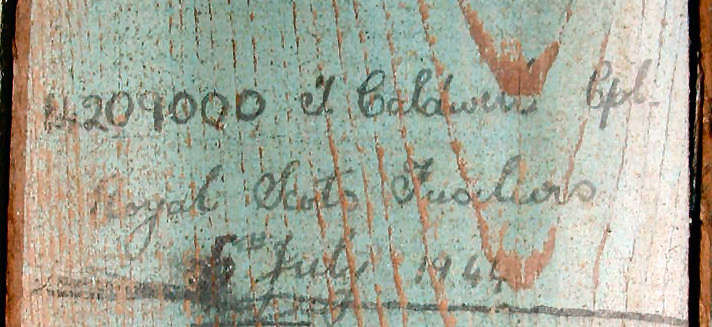
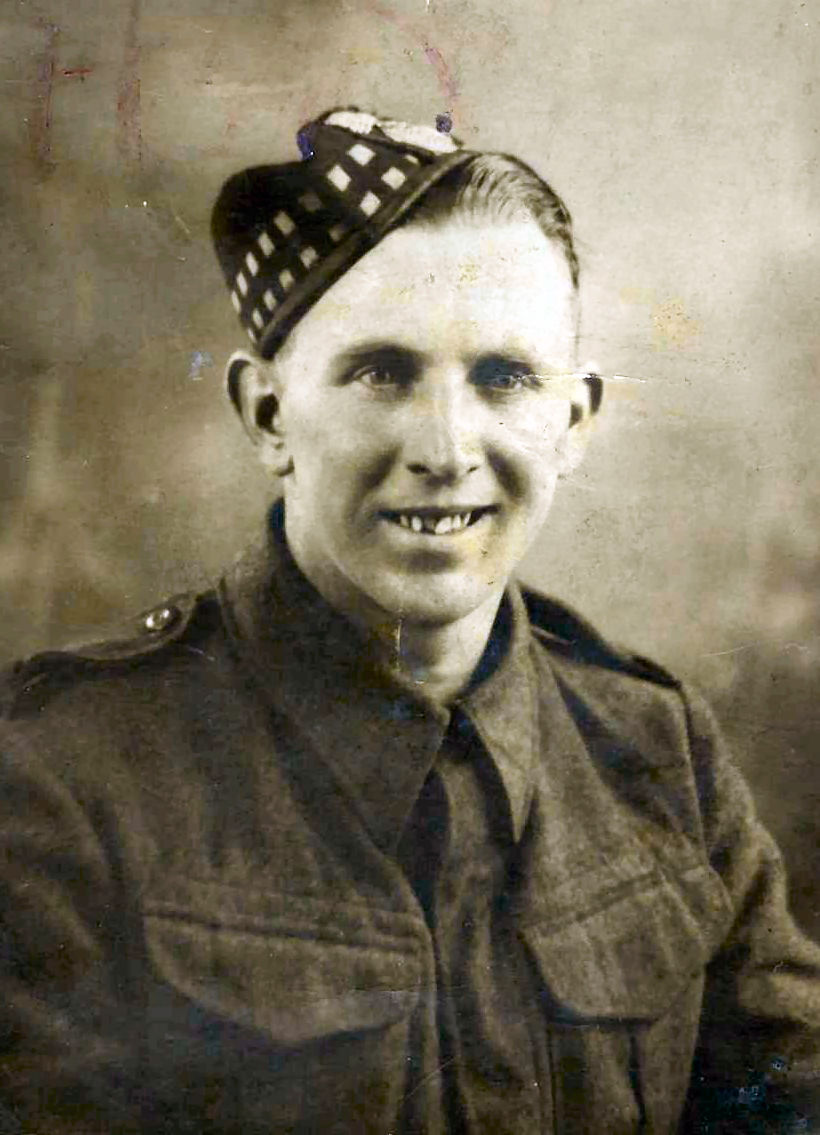
[see T Caldwell wartime photo and signature (click on images below to enlarge)]
Early Life
Born on the 6th of February 1918 in New Cumnock, Ayrshire.
The rest of the information in this section comes from a largely unsourced Ancestry tree.
This suggests he was one of nine siblings (two died in infancy). That his father died in June 1942. It also suggests that he married in 1943.
There is at least one son from this union as we have had contact with Caldwell’s daughter in law, Marjorie, who provided the photographs of him.
Caldwell gives his profession on enlistment as farmer – though the village was built on local mining.
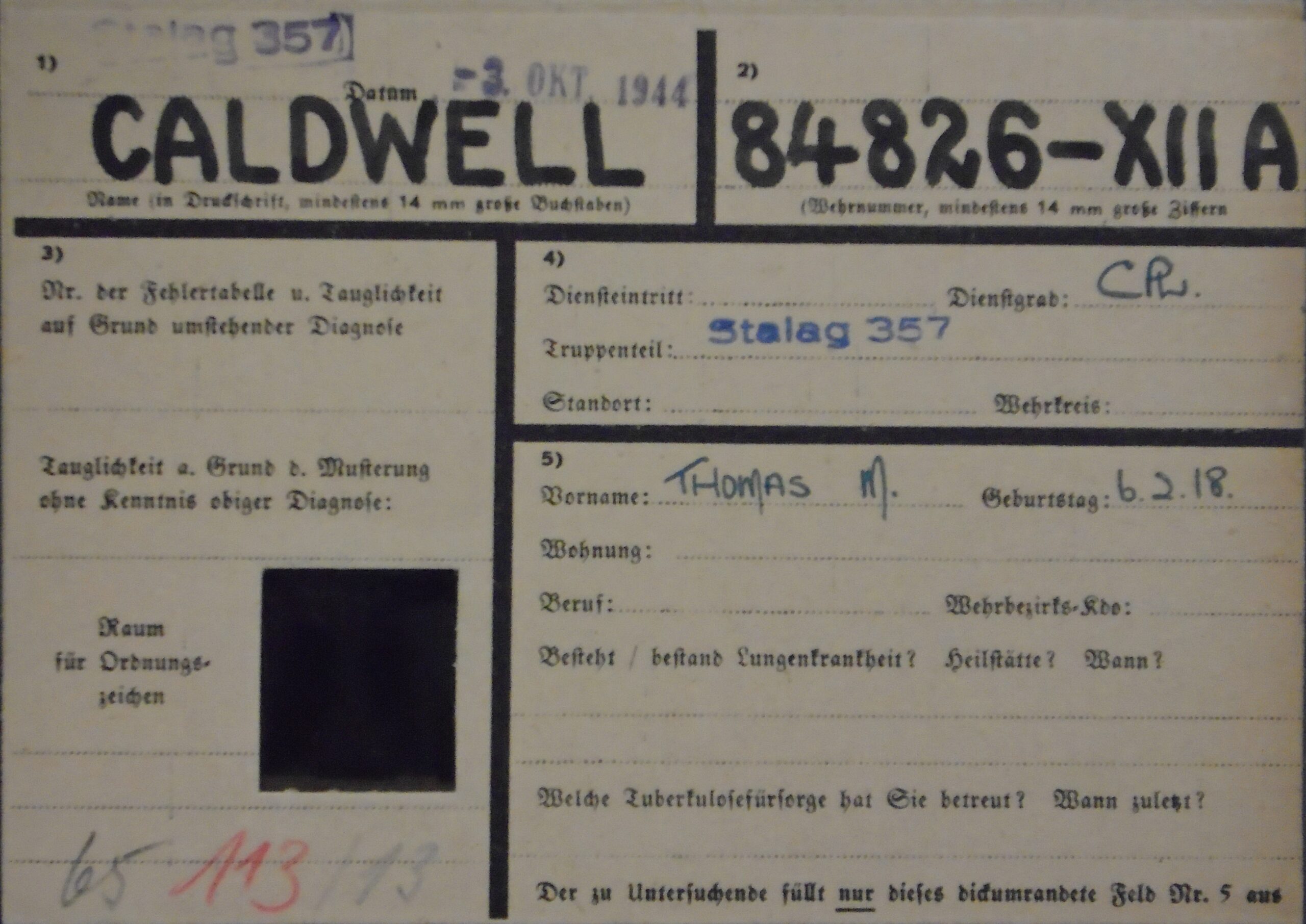
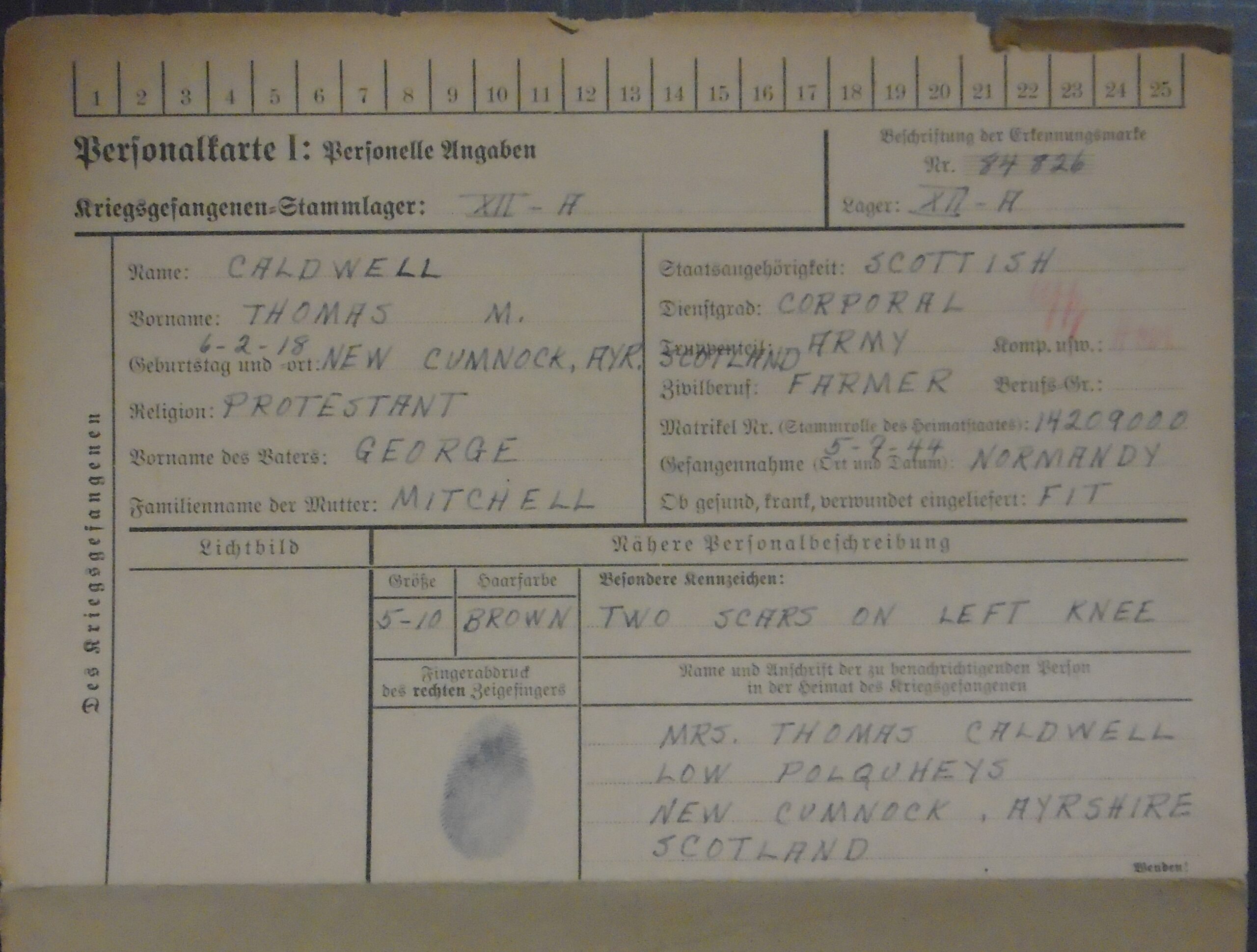
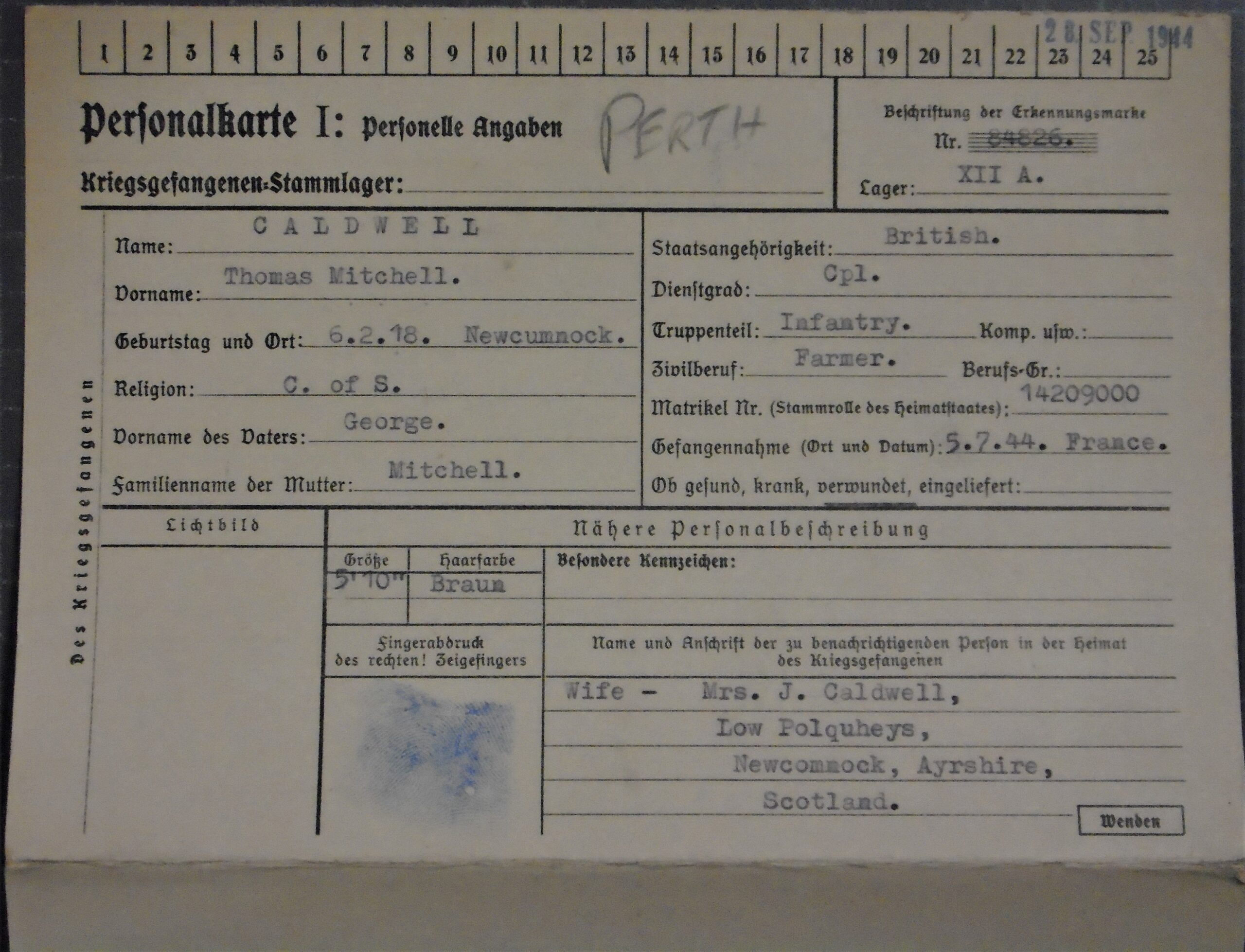
His German PoW Card describes him as 5ft 10 with brown hair.
Service Life
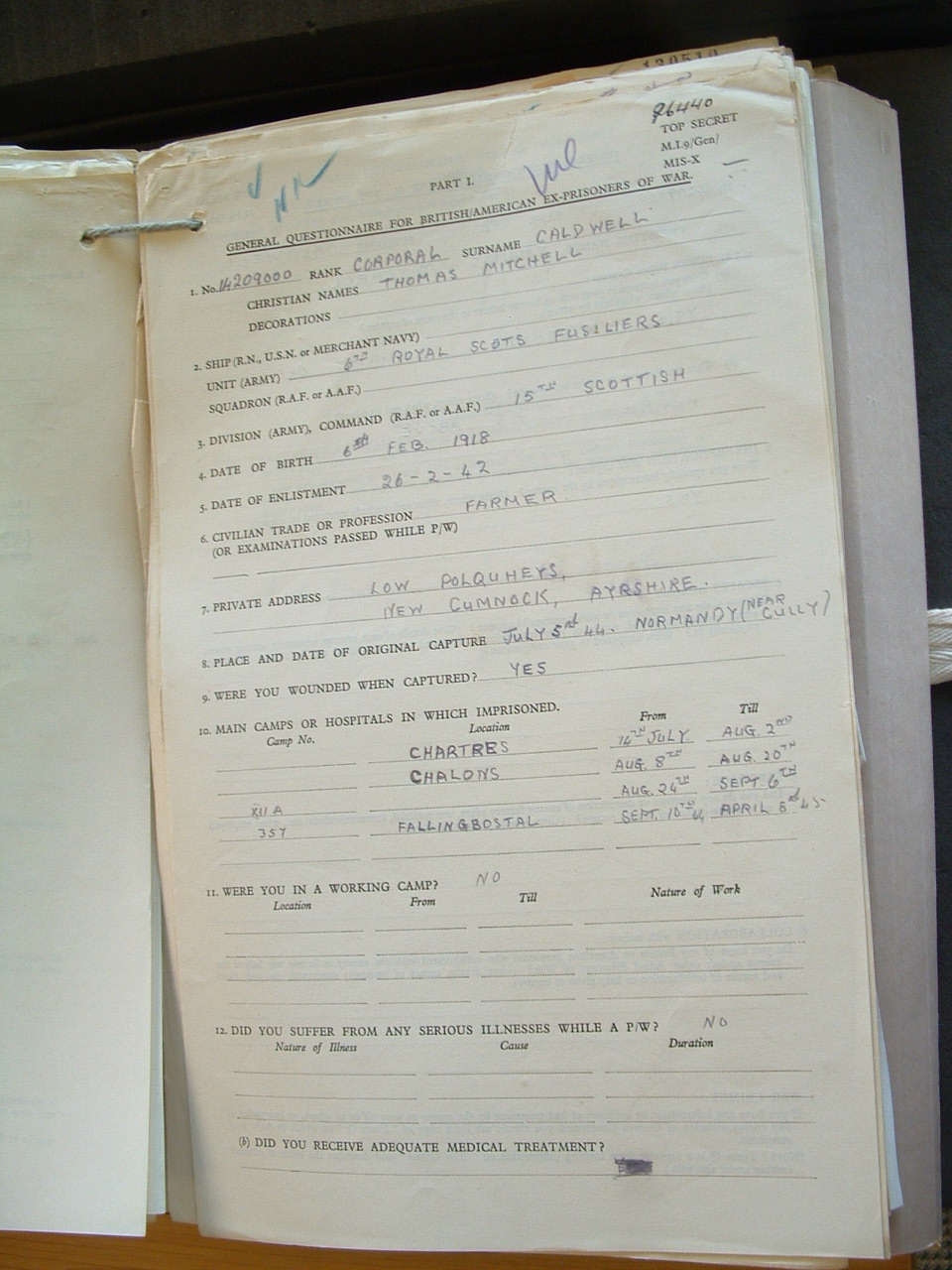
Caldwell’s returning PoW form states that he enlisted on the 26th of February 1942. His service number suggests that initial training would have been through the General Service Corps. It is not clear when he was assigned to the Scots Fusiliers.
Time in Normandy
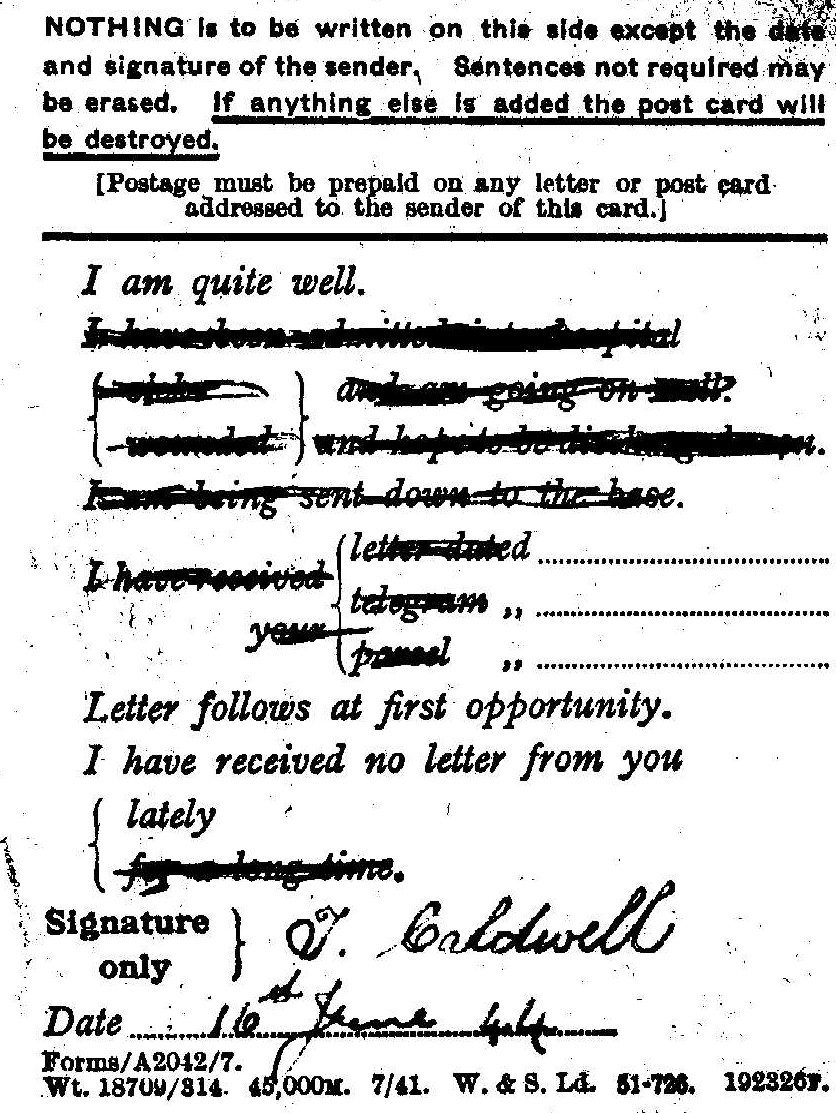
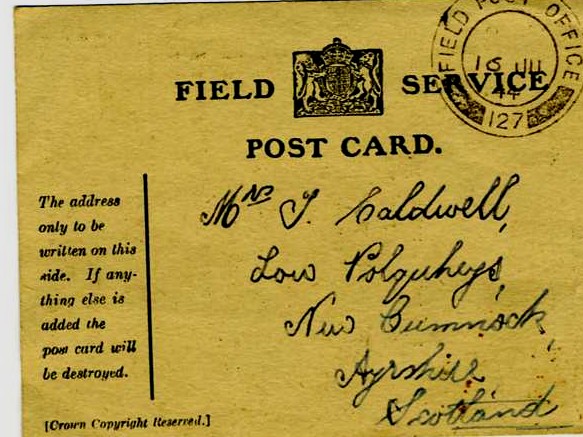
On the 16th of June he sent a standard “Field” postcard back home. This was the day that the Battalion crossed to France – the War diary for the 17th records one officer and nine other ranks as casualties in the process.
[See the Field Postcard images]
The Battalion War Diary for the 26th states that the battalion had been involved in the taking of “St Mauvieu” (St Manvieu-Norrey) as part of Operation Epsom, at the cost of twenty-one killed, 113 wounded and nine missing. The diary comments that this was the Battalion’s first action since June 1940 and the Commander commended them for their efforts.
In his returning PoW form Caldwell gives his date of capture as the 5th of July near Cully; however, the official record shows him as missing from the 29th of June.
The entry in the War Diary for the 29th shows the Battalion moving up to support 8RS in their clearance of the area between Rauray and Haut Du Bosq. Later that day a German counterattack pushed them back and overnight they take up a defensive position near Haut Du Bosq.
The regimental records contain a report regarding the missing servicemen from the 29th. From this we learn that Caldwell was 2nd in command of a 6pdr Anti-Tank gun crew whose vehicle was hit by a shell.
Fusilier Mowatt & L/Cpl Gardner (both of whom who survived, though Gardner is described as “Shocked”) were the last to see Caldwell as they took their gun into action. Sgt Mason (who would have been in charge is reported as “Dead” with the other two members of the crew, Fusiliers Noble and Mills as “Dead Presumed”.
These latter are recorded on the Memorial Wall at the Commonwealth War Graves Commission cemetery at Bayeux. The rules governing the reporting of casualties at the time meant that if a person could not be specifically identified (usually via their “dog tags”), then even if it was known they had been killed, they had to be listed as “Missing, Believe killed”.
Caldwell indicates, on his returning PoW form, that he was wounded on capture.
His status as a PoW was not officially reported until the 28th of September.
PoW Life
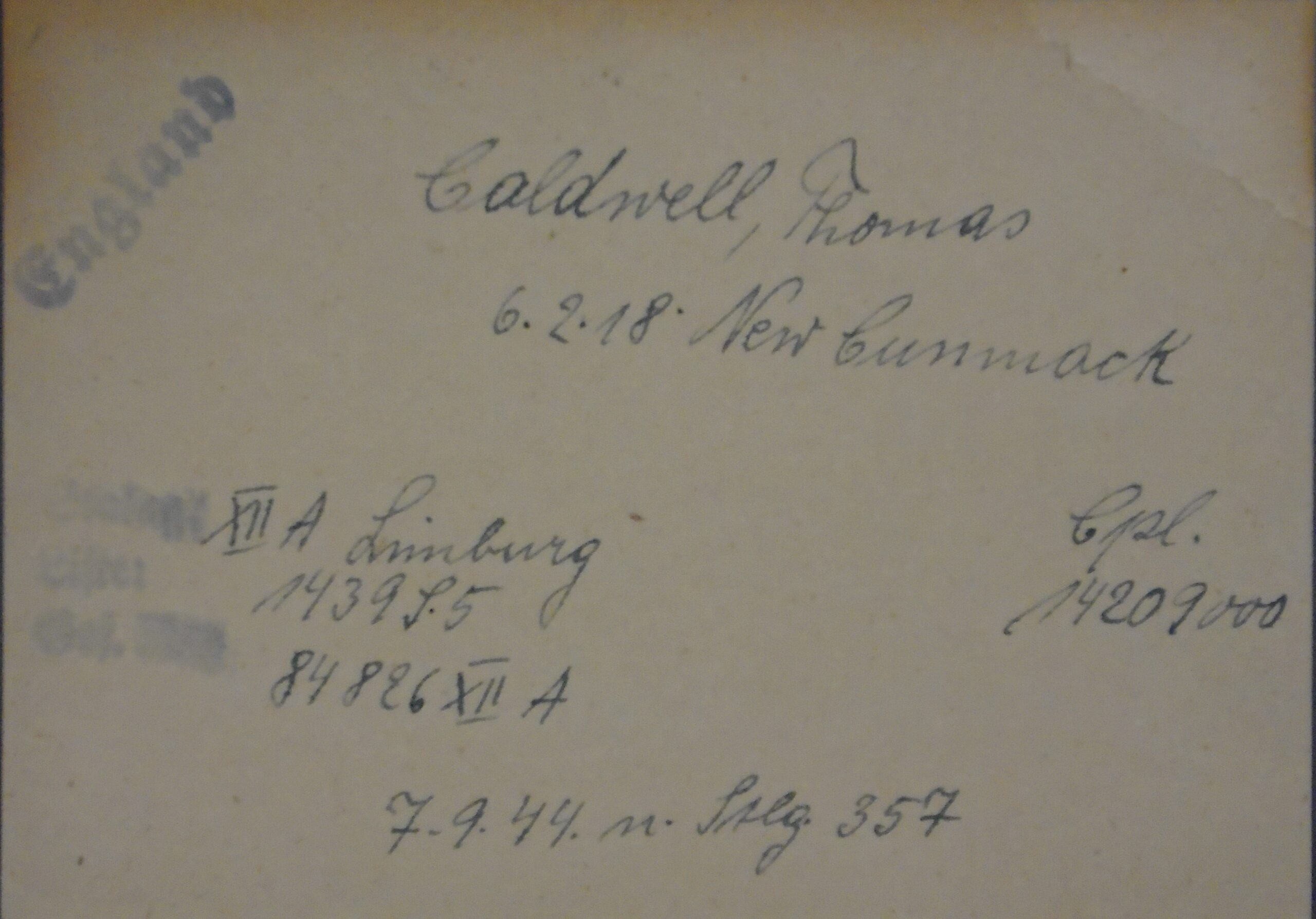
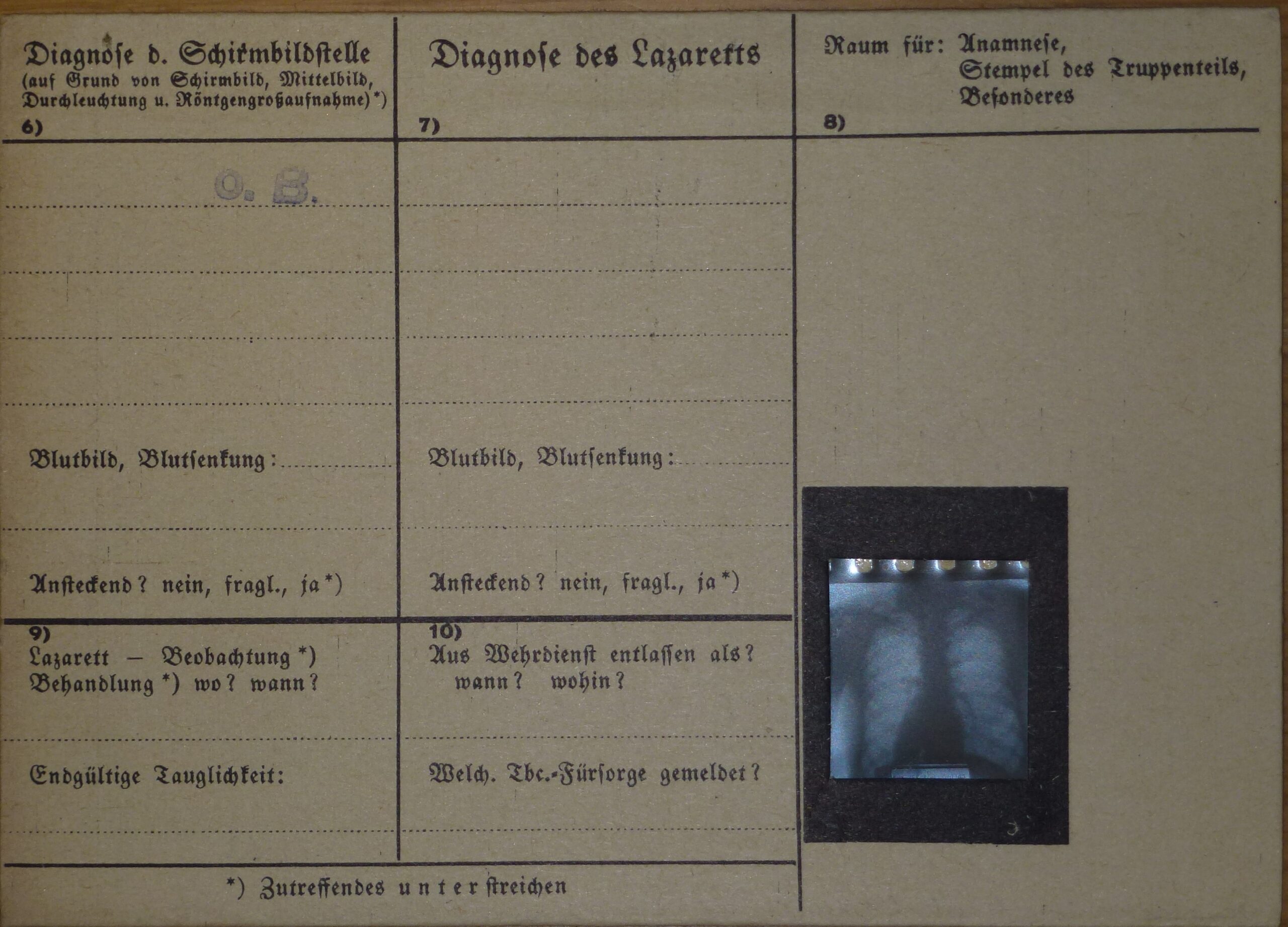
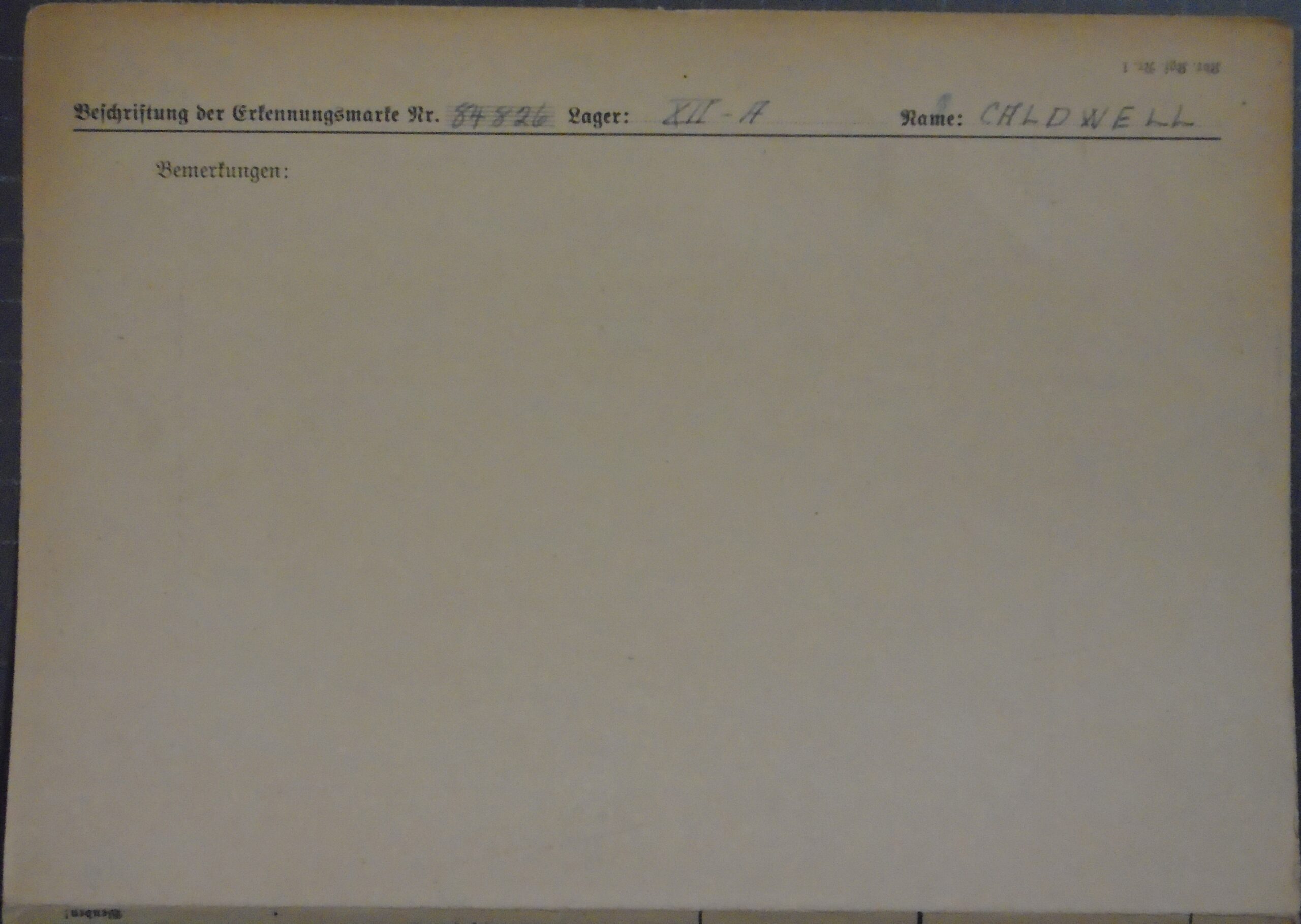
We do not know if he was held anywhere prior to ”The Shed.” He seems then to have taken the standard route to the infantry processing point at Stalag XIIA Limbourg. He mentions having been at Chartres from the 14th of July to the 2nd of August; Chalons (sur Marne) from the 8th of August to the 20th of August. He arrived at Limbourg on the 24th of August – it was here that his PoW card was produced, and he was given the PoW number 84826. He is there until the 6th of September and arrives at Stalag 357 on the 16th.
Located in Lower Saxony Oerbke was associated with Stalag XI-B at Fallingsbostal and the conditions at the camps were considered poor with little food, medical supplies, or new clothing. Though discipline amongst the British prisoners had improved through the efforts of RSM John Lord, a Grenadier Guardsman attached to the Paras. Bergen-Belsen originally a separate camp was now a satellite of Fallingbostel.
Fallingbostel and its sub camps formed the biggest camp complex in Germany holding prisoners of all nationalities – particularly Poles and Soviets.
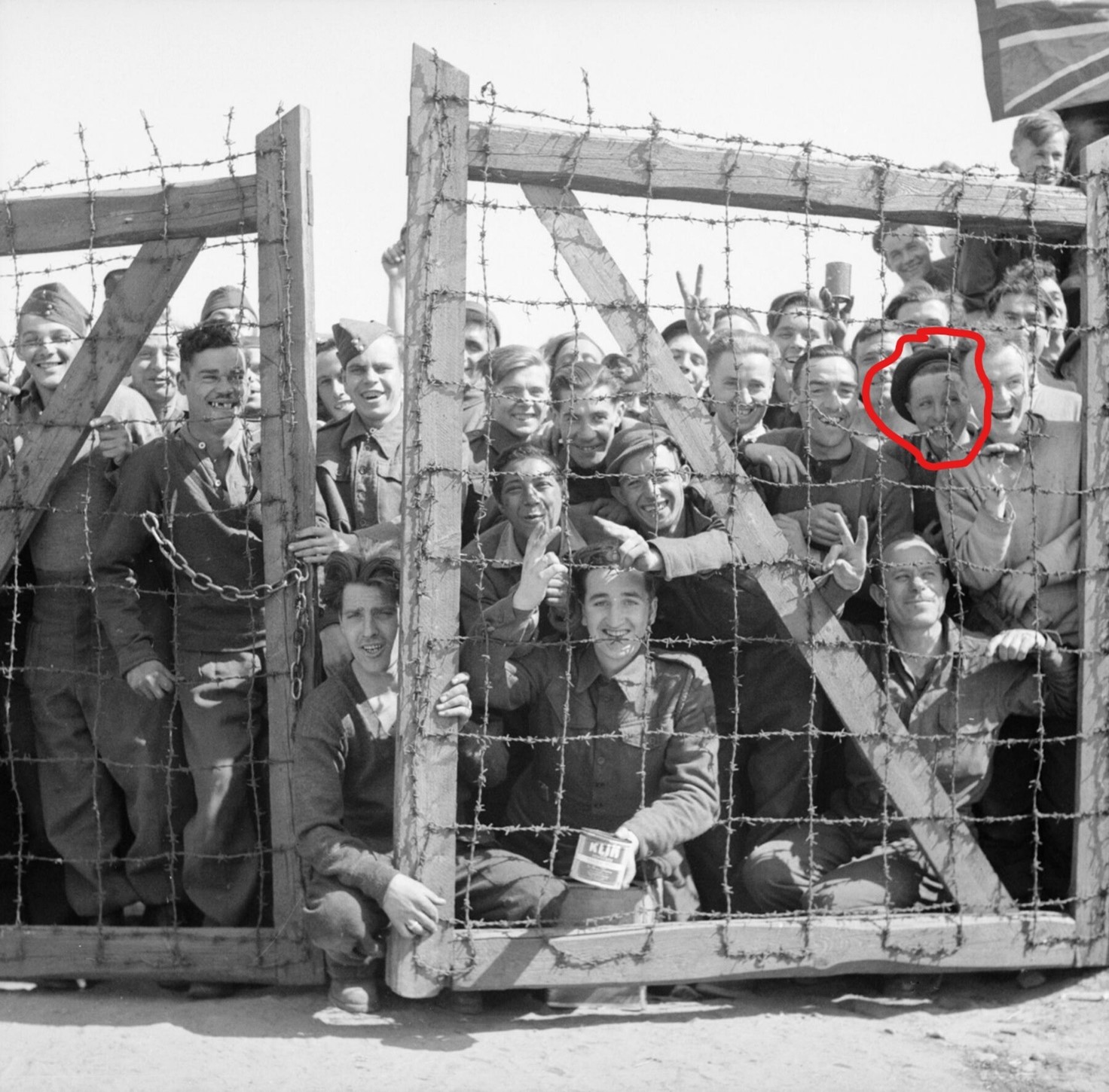
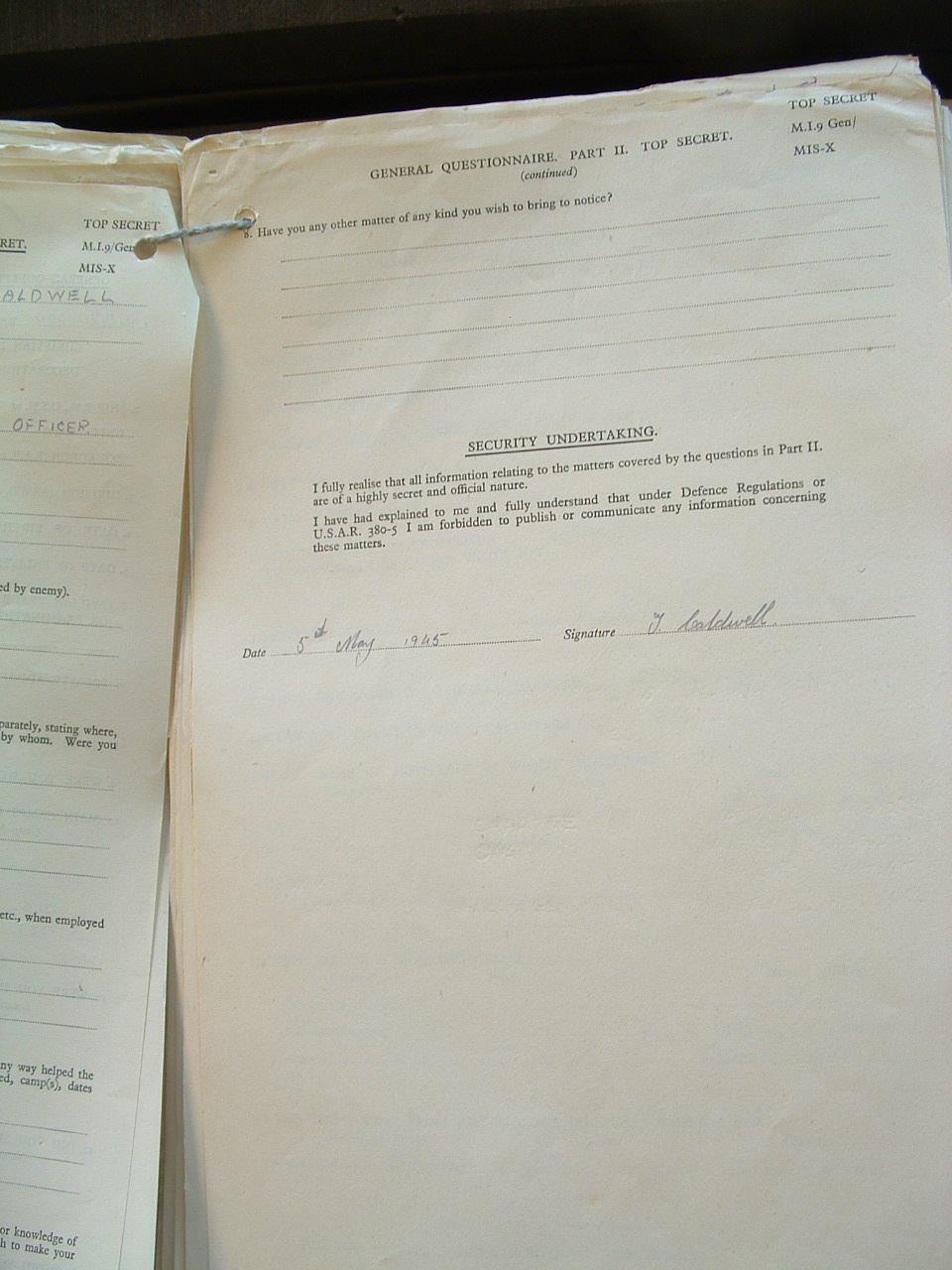
In Early April 1945, the Germans marched some 12,00 Allied prisoners away from the camp. One of the columns was mistakenly attacked by 9 RAF Typhoons killing dozens (one post suggests 60) and wounding many more. Caldwell on his returning PoW form, dated 5 May, seems to say he leaves 357 on 5th of April which suggests he was on that march. However, some prisoners were returned to the camps so he may have been there when the camp was liberated by the 8th Hussars Recce Troop on the 16th of April – in fact, there is a photograph of prisoners by the gates said to be on that on that occasion in which someone looking remarkably like our man can be seen.
Post War
[see T Caldwell post war image]
He returned to Scotland and farming. He died in 1992.
Research Done
Other Links
Caldwell wartime photo and signature [return to info]
Field postcard front and back [return to info]
German POW Card T Caldwell [return to info]
Caldwell Liberation [return to info]
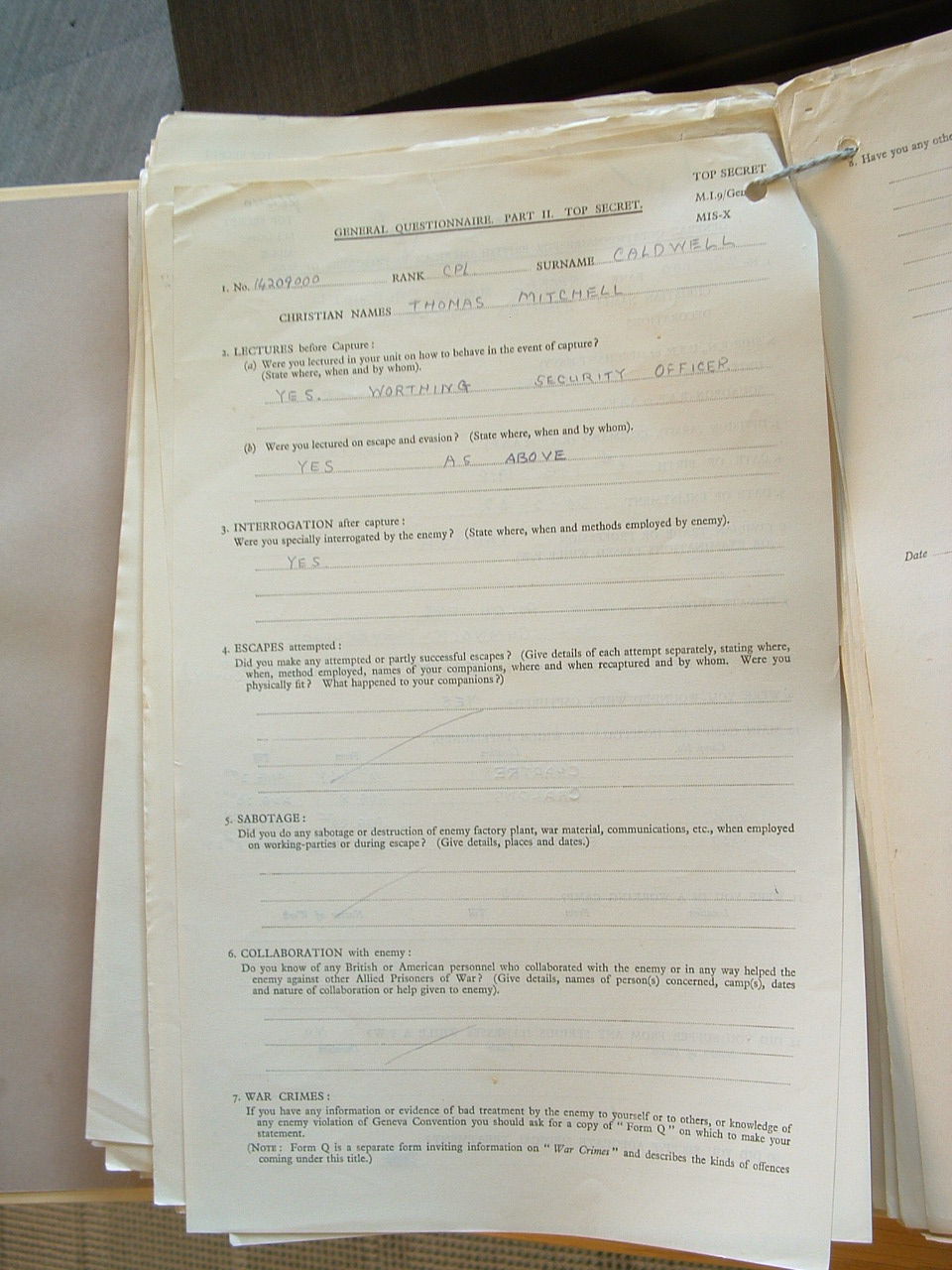
Returning PoW Questionnaire T Caldwell [return to info]
T Caldwell Post War [return to info]