Pte Percy Douglas White 2100201
7th Battalion Green Howards
Summary
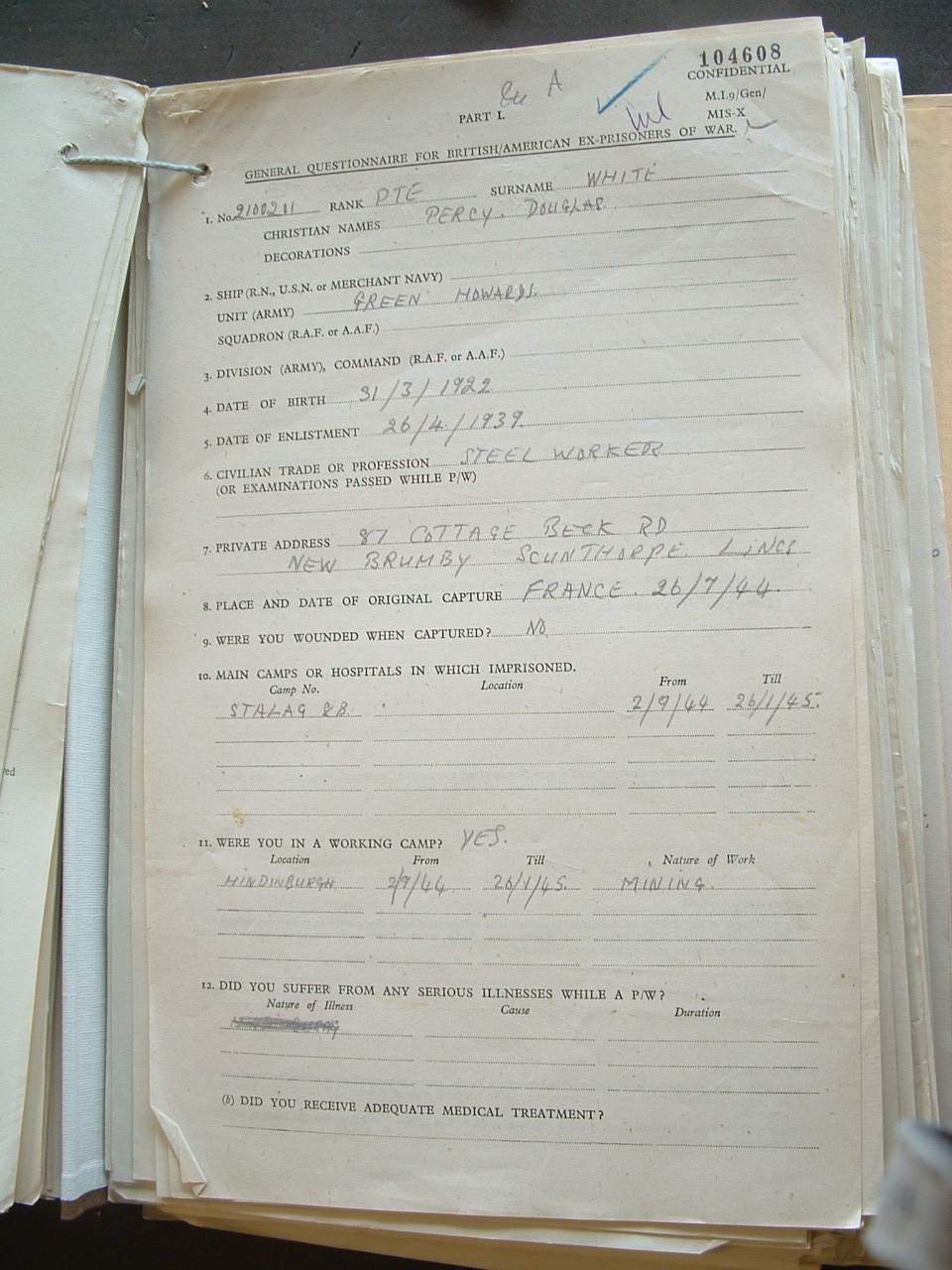
Born in 1922 Percy Douglas White enlisted in April 1939. At the time he was captured on the 27th of July 1944, he was serving with 7th Battalion Green Howards. He was taken to Stalag VIII-B Teschen and hence the coal mine at Hindenburg. He would have suffered the privations of “The Long March.”
On being released from the Army he returned to Scunthorpe to work in the Steel Industry. He died in 1986.
Early Life
Percy Douglas White was born on the 31st of March 1922 in Tredegar, Wales, the first of four siblings. He appears to have been named after his father’s bother who had died in 1917. His father, originally from Gloucestershire, was a steelworker. It is not clear when the family moved to Scunthorpe. But they are there on the 1939 Register. The family address was in Cottage Beck Road, New Brumby.
Service Life
On his returning PoW form White says that he enlisted in April 1939. His service number suggests that this was into the Royal Engineers. It is not known when he was transferred to the Green Howards – it may even be as a replacement in Normandy.
The 7th Green Howards had reformed in 1938, were involved in the B.E.F. of 1940 and, though not intended for front-line duty at that point, were caught up in the fighting around Arras before retreating to Dunkirk. They later saw action in Cyprus, Iraq, Syria, Egypt, and North Africa with the 8th Army before being recalled to Britain in 1943.
Time in Normandy
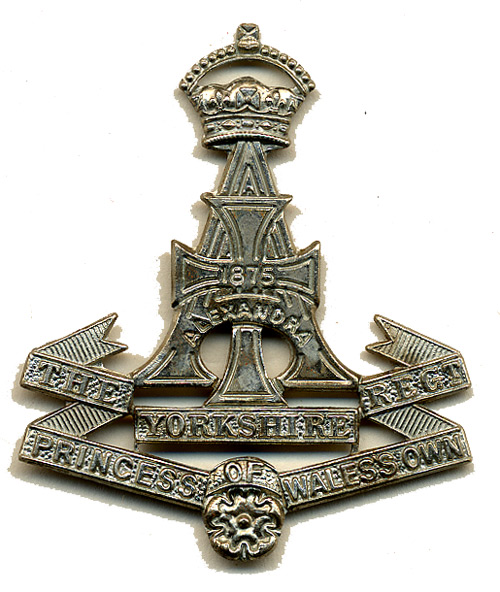
[See the Regimental Badge Green Howards]
On D Day the Battalion landed on Gold beach advancing on Ver-sur-Mer. The Green Howards 6th Battalion had the distinction of penetrating the farthest into France of any unit that day (7 miles). The 7th Battalion consolidated North of Coulombs. The next day they moved towards Brouay, the fighting ebbed and flowed around that point for several days. There followed a period of consolidation. Then a move over to Bayeux and a drive through La Belle Epine eventually reaching the Longraye area near the end of the month. The advance stalled in this area for some time.
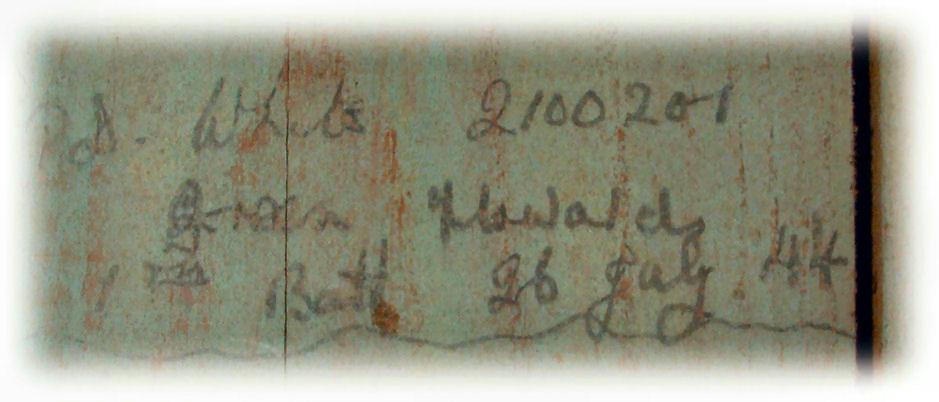
White was captured with Reid on the 27th of July (he says 26th on the wall and his Returning PoW Form). The war diary for the 27th states that late morning a patrol led by Sgt Laing came under fire as they went into a wood. Half of the patrol got back to their own lines but four, thought to be wounded, were posted missing. Two of the four died and where buried close by (later reburied in Tilly-sur- Seulles War Cemetery).
[See link to Reid and White capture???]
PoW Life
After “the Shed” his route would have been like that described by Willen to Chartres, Chalons-sur-Marne and then to Limbourg -Stalag XII-A – for processing.
[See Link to journey to prison camp???]
2nd of September 1944 he becomes PoW 82197 at Stalag VIII-B Teschen. From there is assigned to the coalmine at Hindenburg until 26th of January, when the Germans marched the prisoners away from the advancing Russians in what was to prove the worst winter of the century to that point. Some of the prisoners from Teschen being on the road for twelve weeks.
Post War
White was demobbed in the usual way and returned to Scunthorpe. He married in 1946, and the couple had at least two children.
He worked in the Steel industry, latterly as a Sinter Plant Operator – the process that amalgamates the various powdered raw materials into an agglomerate to go into the furnace.
He died on the 3rd of August 1986.
Research Done
We have no additional research to share at this time.
Other Links
We have no additional links to share at this time.
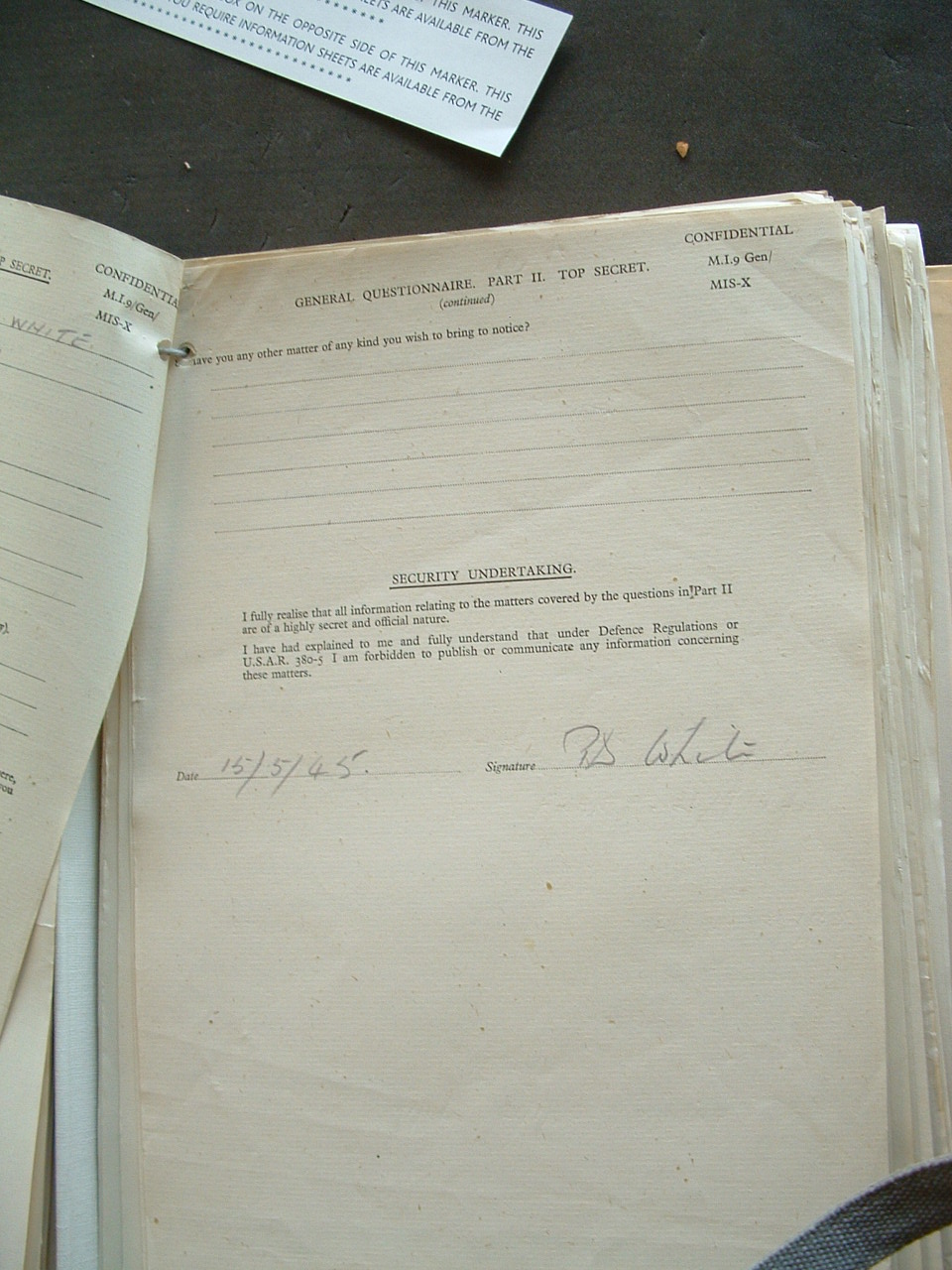
Signature White [return to info]
Regimental Badge – Green Howards [return to info]
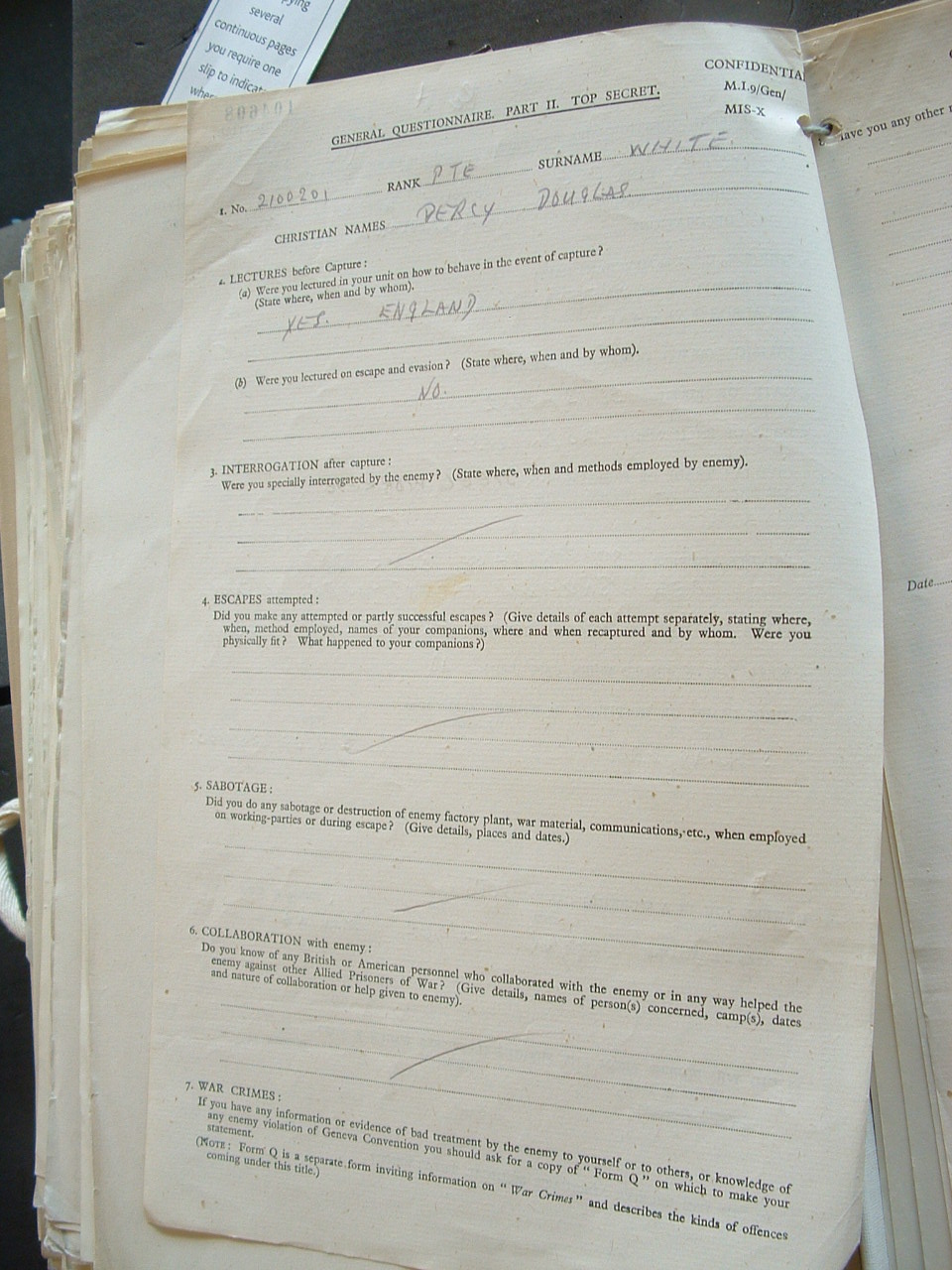
Returning PoW Questionnaire – White [return to info]