Ancient monuments (no, not us!)
A drying day dawned – certainly better than the weather that we’d had on the way over. Having breakfasted, we set off on our third time-travelling journey of the year. Spanning from the Stone Age to Vimy Ridge and WW1. 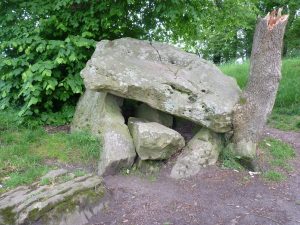
We started way back in pre-history with a visit to the Dolmen at Fresnicourt le Dolmen. Those of you who are regular readers of this blog will recall, Glyn (my partner in crime on these trips) is interested in all periods of history, rather than just the ones involving tanks & ‘planes. A friend of mine up in Manchester – Tim – would probably say “Bravo!!” to that!!
In the past, when we’ve looked for these ancient monuments, they’ve not always been what we’ve expected. I recall, especially, our “Spinal Tap” moment with the first one – la Demoiselle de Bracqueville – which is tiny! This time, however we weren’t to be disappointed as we saw from the masses of large stones piled up onto each other. How they managed it back then without power-driven lifting tools, I don’t know.
The Journey to Vimy Ridge
We then headed towards Vimy Ridge. On route we spotted a sign to the British, French and Canadien Cemetery at Ecoivres. So, we s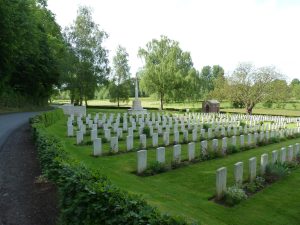 topped for a short while to pay our respects. Once again, we were approaching that part of the world where it seems that Commonwealth War Graves Commission Cemeteries (CWGC) replace milestones as there are so many.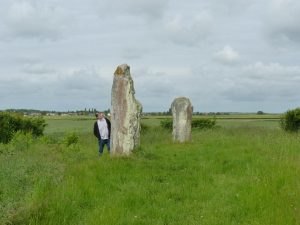
Back into the car & back in time again. Revisiting pre-history in the shape of a pair of standing stones -the twin menhirs of Les Pierres Jumelles. I was getting concerned. We were actually finding locations – even ancient monume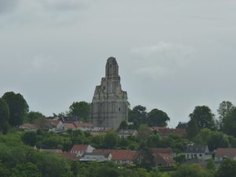 nts – with relative ease. Not at all like our usual visits!!
Les Pierres Jumelles are on high ground. Accordingly they afforded us our first views of the ruins of the twin towers of the Abbey at Mont son Eloi, which we soon drove past on our way towards Vimy.
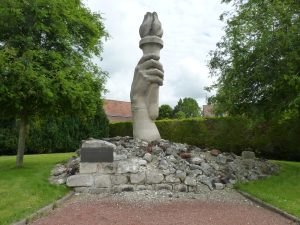
We stopped briefly at a monument to the man responsible for much of the rebuilding of the towns in this part of France before continuing.
Lichfield Crater and the “Red Zone”
Sp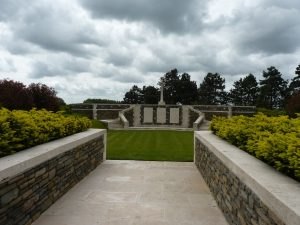 otting a small sign for the Lichfield Crater we decided to investigate. Lichfield being a place in the Midlands not far from where I used to live – home for us of pitch and putt golf and Merrie Monk from Marston’s (you guessed – a beer – itself now history). This was an unusual site for a CWGC site in that it made use of the crater left behind following the detonation of a large mine under the German defensive line. On our way towards the crater, we passed by indications that the war really hasn’t gone away from this area – signs for unexploded ordnance. The signs denote that is the “Red Zone” a part of France that’s unlikely to ever be clear of the effect of war.
Vimy Ridge
So, now on to the Canadian National Memorial at Vimy Ridge.
The battle of Vimy Ridge took place in April 1917 & is seen by many as a defining moment in Canada’s History. If you wish to learn more about this battle there’s some impressive information on the Canadian Veterans’ website.
The Memorial is an impressive piece of architecture standing on top of the ridge. Apparently, during the Second Wor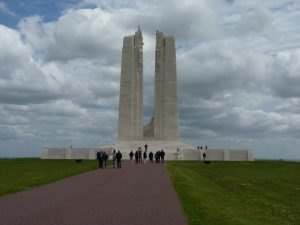 ld War, there were rumours circulating that the Germans had destroyed it. In fact, it was Hitler’s favourite First World War Memorial as it depicted peace not war. So, he had photos of himself taken by it in order to show that it was undamaged He then arranged for troops from the SS to guard it – from both the Allies AND the German army – to ensure that it wasn’t defaced!
Between the Memorial and the visitors’ centre are swathes of land largely untouched since the First World W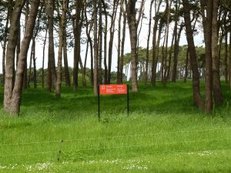 ar. Trees have been planted to try to soften the view, but trench lines and mine explosions can still clearly be seen. As can many “Red Zone” warning signs – right next to the paths! Interestingly, sheep graze on the land… I wonder how many are lost each year?
The Visitor Centre and other attractions.
The visitor’s centre is large and interesting. It is manned by Canadian students. Unfortunately, the one that I spoke to didn’t know the answers to a couple of basic questions I asked, which somewhat disappointed me.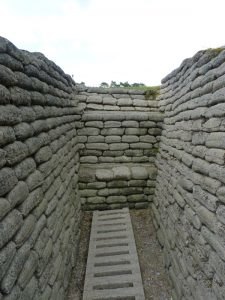
Next to the visitor’s centre are some preserved trenches made whilst they were waiting for the stone to arrive for the main memorial. Basically sandbags were filled with concrete and placed where the originals would have been. This was done to give an idea of what the trench system would have looked like. There’s both Allied and German ones – surprisingly close together given one’s normal thoughts of “No Man’s Land” in between. There’s also a tour that you can go on through one of the tunnels that was used to bring up reinforcements in relative safety. However, we didn’t have the time to explore this.
So, onward from Vimy & past the interestingly named CWGC Tank Cemetery. The name has nothing to do with “tanks” in the military sense. We then looked for some remnants of the German Hindenburg Line of the First World War. I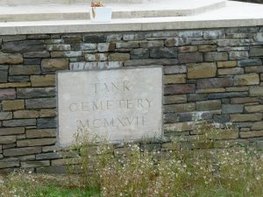 was aware that some had been noted near to the village of Héninel. Unfortunately, we were unable to find these. I did some further research on our return to the UK. I found out where they are & realised that we got quite close!
So, given the time, we set off on the remainder of 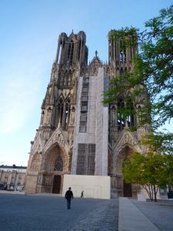
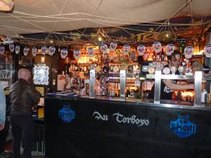 our journey towards Reims. That night we had a ramble around the town. Where we were saw the Cathedral and were able to find an interesting bar… amongst many!




Recent Comments